


The low taper textured fringe is the rare men’s haircut that looks sharp at the edges and relaxed on top. This guide shows 20 looks sorted by hair type, length and style, with the face shape match for each one. Every section also gives you plain barber instructions so you leave the chair with the cut you pictured.
Low Taper Textured Fringe Straight Hair
Straight hair has no natural bend, so the cut has to build the movement for you. This category is for anyone whose hair lies flat or heavy and who wants a textured fringe haircut without heavy product. Judge each look by how much texture your barber can carve in, because point cutting matters more than length here.
Choppy Point Cut Fringe
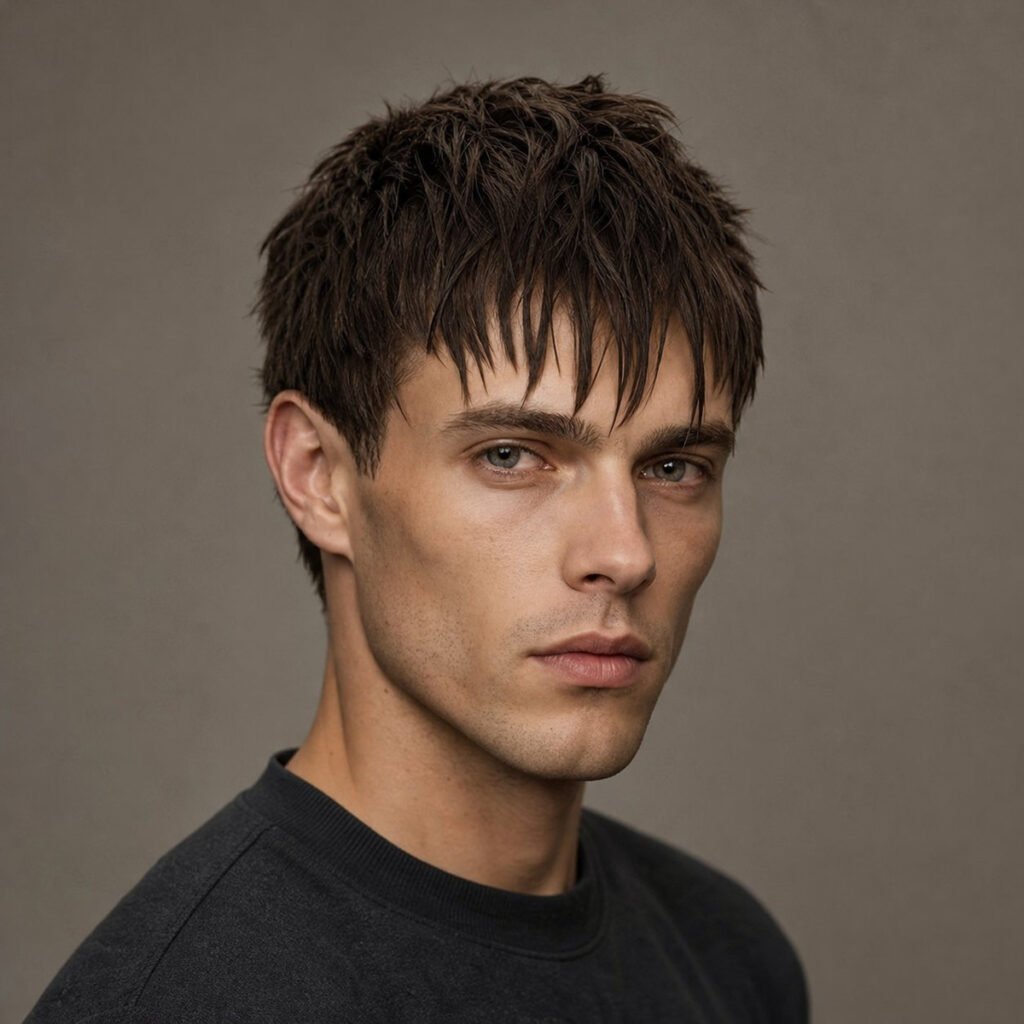
This look keeps about three inches on top, point cut into a choppy fringe that stops just above the eyebrows over softly tapered sides. It suits an oval face or square face with medium thickness hair. Ask your barber to point cut the ends and skip clippers on top, then rough in a little matte clay with dry fingers.
Side Swept Textured Fringe
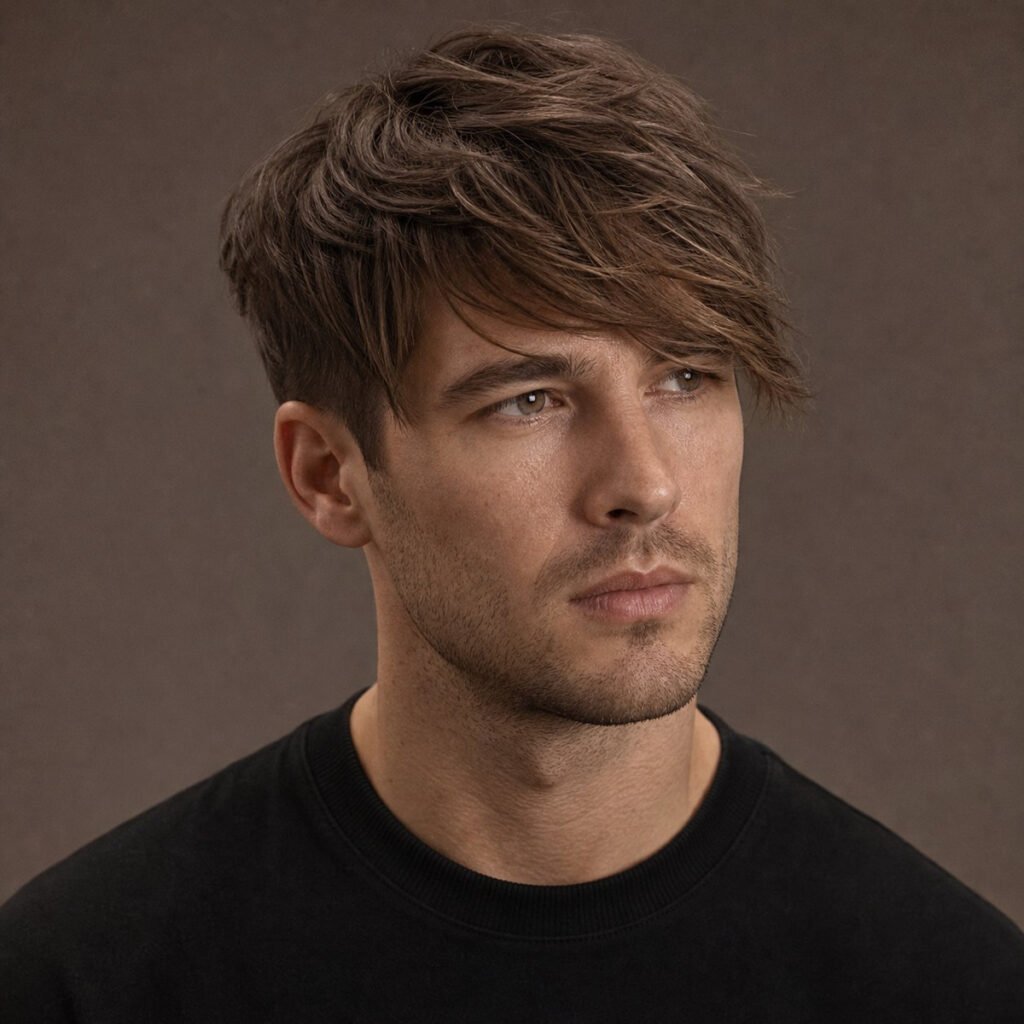
The fringe is left longer at the front and pushed across the forehead to one side, giving a softer line than a straight forward fringe. It works well on a round face or a heart shaped face, because the diagonal breaks up width. Blow dry the fringe in the direction of the sweep, then hit it with cool air so the shape holds.
Short French Crop Fringe
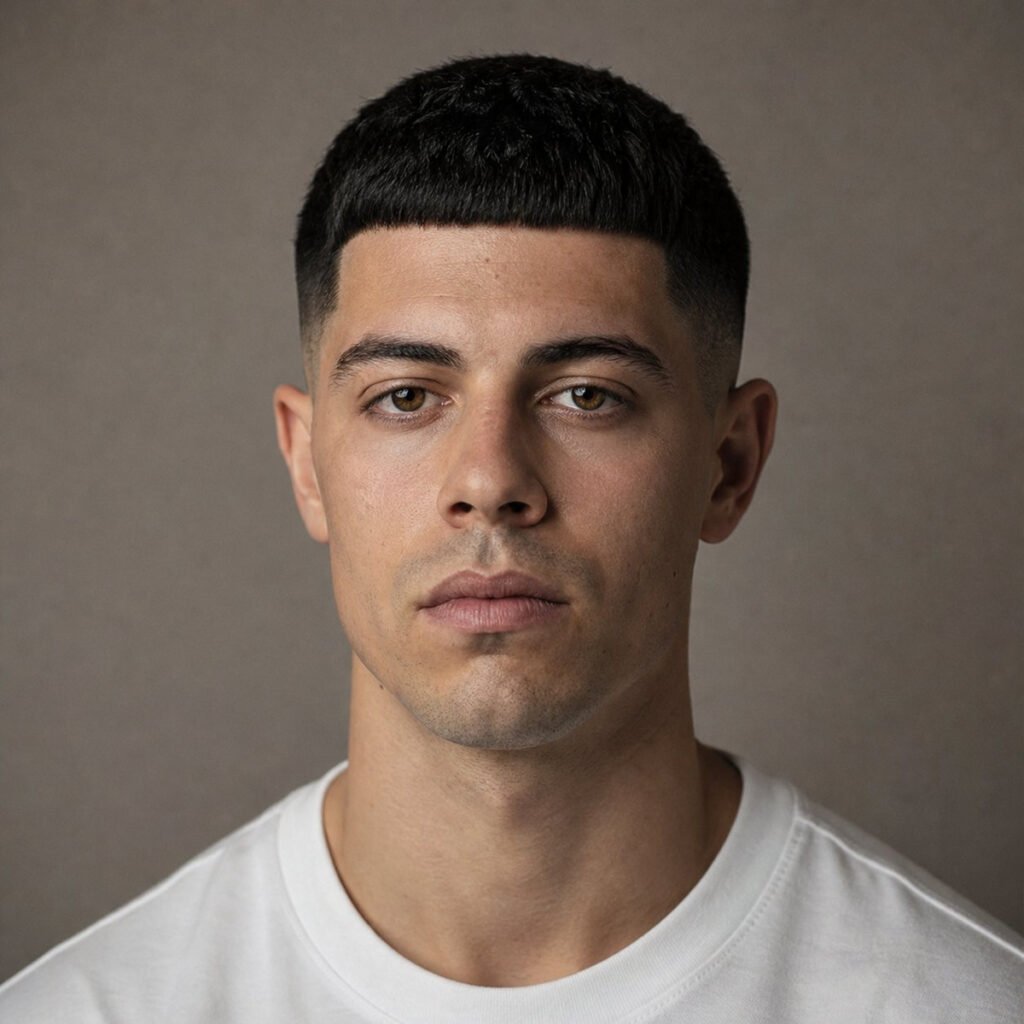
Here the top is trimmed to roughly two inches with a fringe that lands mid forehead, paired with a clean low taper. It suits fine or thinning straight hair and handles a high forehead better than a longer fringe. Dust in a little texture powder at the roots, and do not comb the front flat or the layered fringe haircut effect disappears.
Low Taper Textured Fringe Men
This is the everyday zone, the modern men’s cuts that barbers book all day without any special request. It is for guys who want one reliable cut for work, the gym and weekends. Think about your dress code and how often you can realistically make it back to the shop.
Classic Everyday Fringe

This is the default low taper fringe haircut, with a medium top, a fringe that falls to the brow and sides blended up from the sideburn and nape. It suits nearly any face shape and most hair types, which is why it is the safest first try. Say “low taper, point cut top, fringe at my eyebrows” and bring one haircut reference photo.
Office Ready Fringe
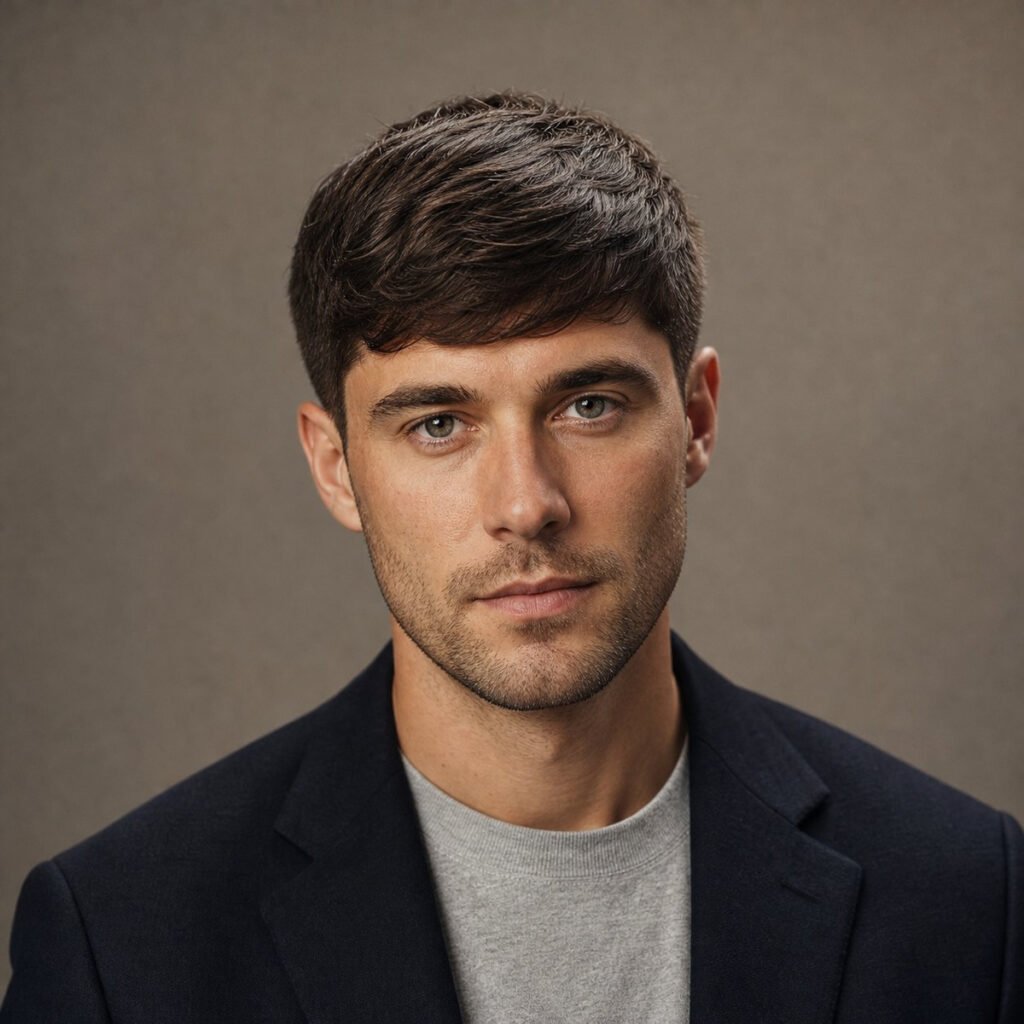
This version keeps the fringe slightly shorter and tidier, with the ends still broken up so it never reads as a bowl. It suits men who want a masculine haircut that passes a strict dress code, and it flatters an oval face or a long one. Use a small amount of low shine cream instead of clay, and pull the front to one side after drying.
Fringe with a Short Beard
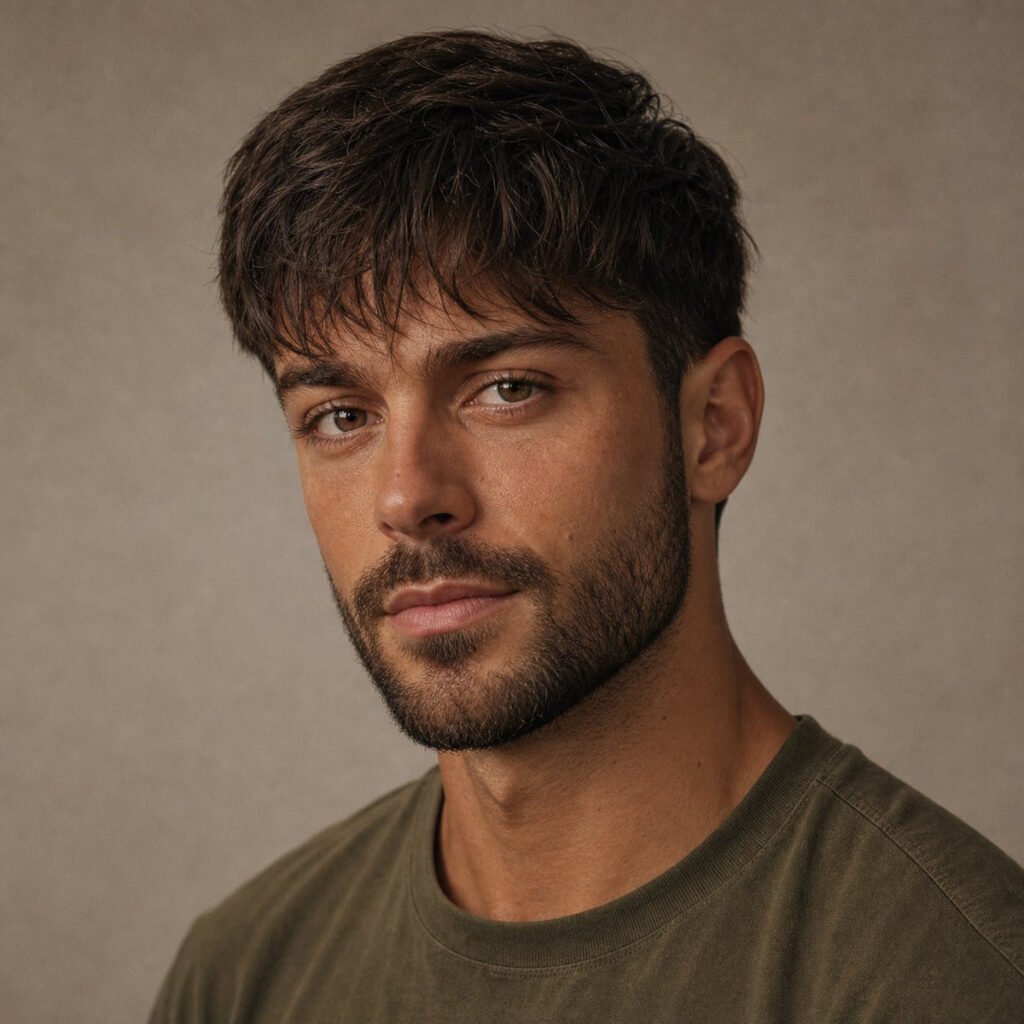
A short beard gives this cut a stronger frame, as long as the sideburn flows into it with no hard line. It suits round face and oval shapes, since the beard adds definition along the jaw. Ask the barber to blend the taper into the beard at the sideburn, and keep the neckline trimmed so both edges match.
Textured Fringe Mid Taper
A mid taper fade starts around the temple instead of just above the ear, so the contrast with the top is stronger. This category is for men who want a sharper outline and are happy to book a visit every few weeks. Consider how much side bulk you carry, since a higher blend removes more of it.
Mid Taper Messy Fringe
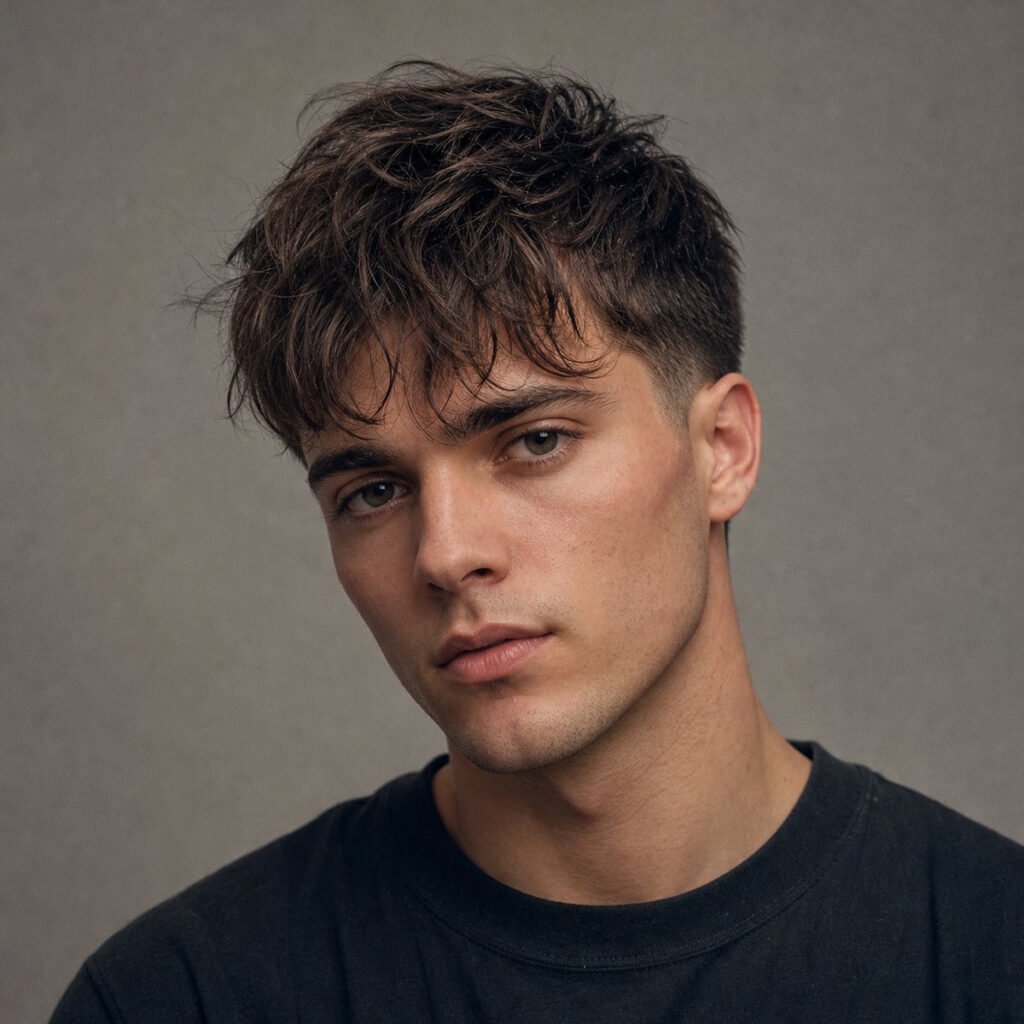
The sides step down cleanly from the temple while the top stays rough, tousled and full of separated pieces. It suits thick or wavy hair on a square face, where the messy front softens the jawline. Spritz sea salt spray into damp hair, blow dry forward with your fingers, then twist a few pieces with clay.
Temple Taper with Forward Brushed Top
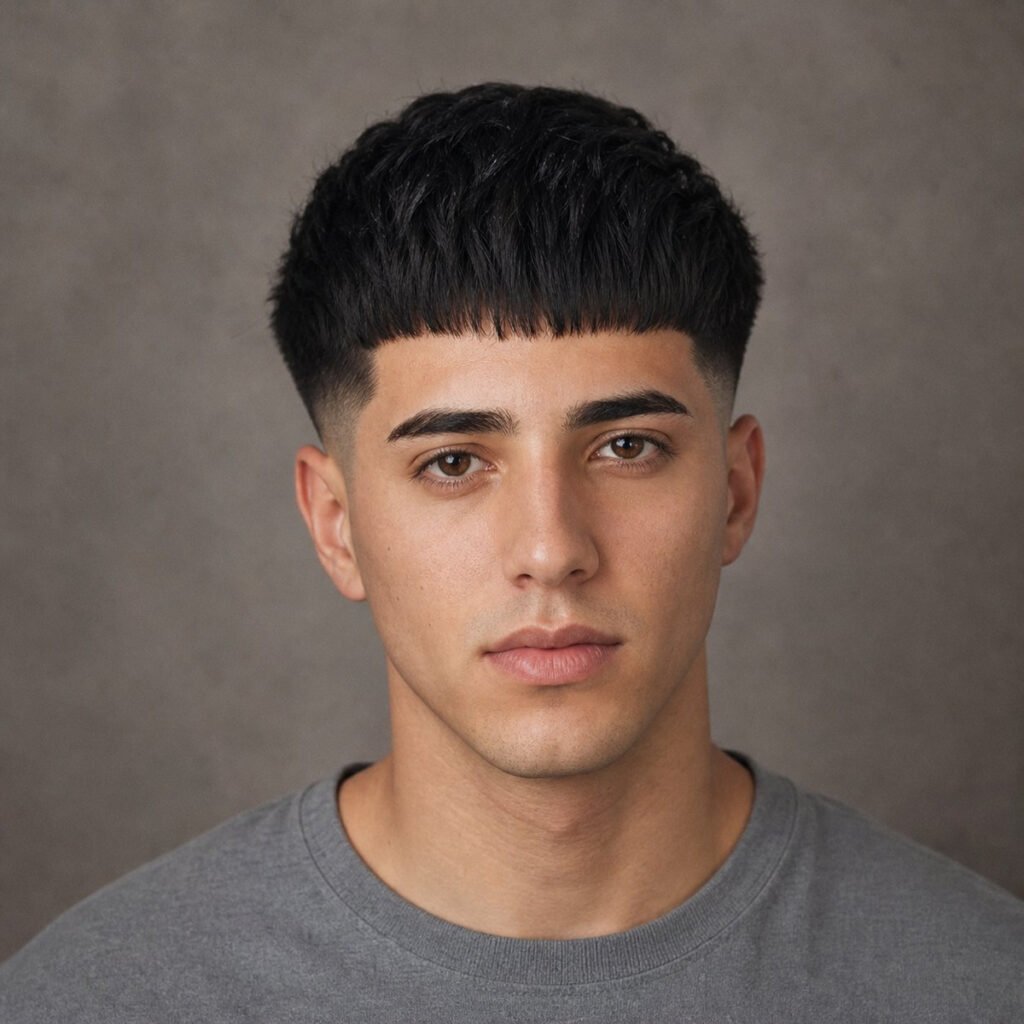
This one has a crisp temple taper and a top brushed forward into a neat but textured fringe. It suits straight to wavy hair and an oblong face, because the forward fringe covers some forehead height. Ask for a blended mid fade that avoids skin at the edges if you want it softer, and mention it clearly.
Low Taper Textured Fringe Curly Hair
Curls bring their own texture, so the job of the cut is to shape and contain it. This category is for curly and coily hair that wants a defined fringe over tidy sides. Remember that curls spring up as they dry, so length decisions should be made with that in mind.
Dry Cut Curly Fringe
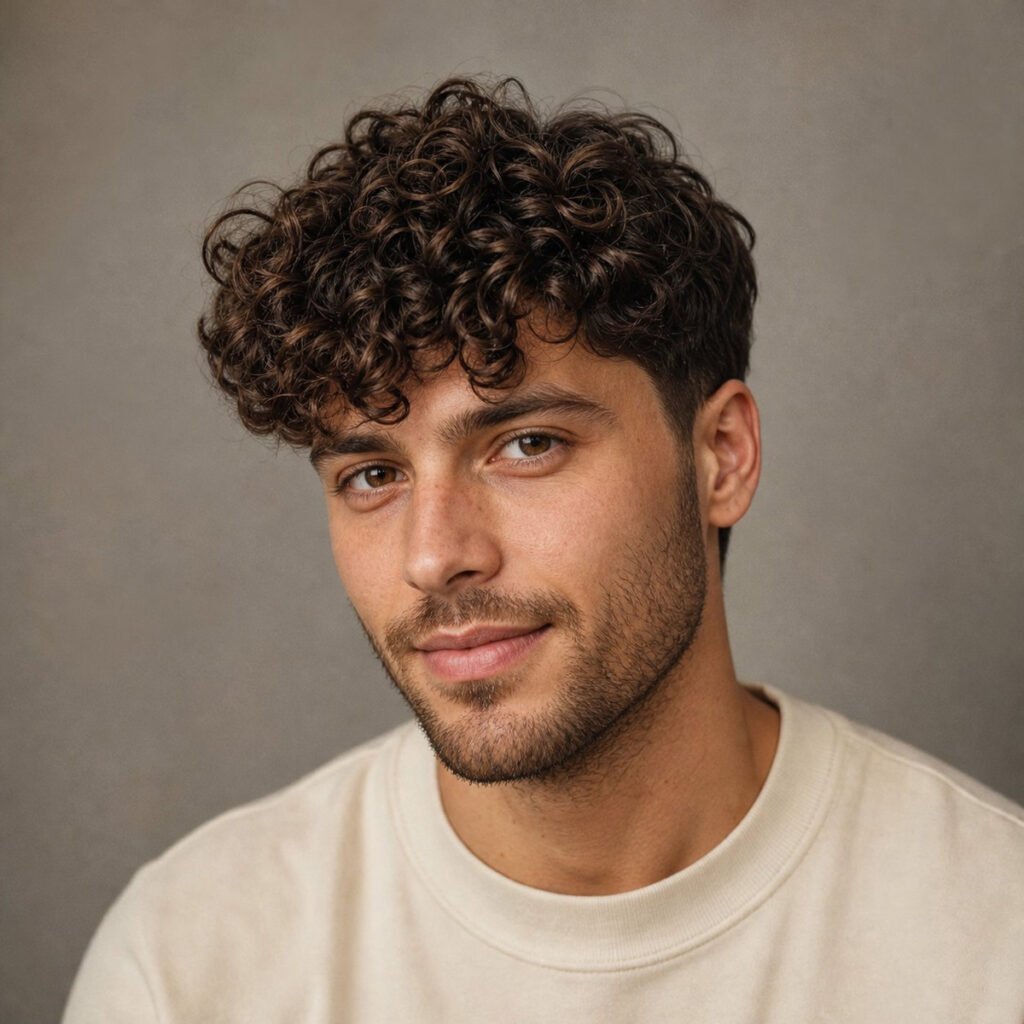
The top is cut while dry so the barber sees the true length of each curl, then the sides are tapered low to keep the shape controlled. It suits loose to medium curls on an oval face or square face. Work a curl cream through damp hair and let it air dry to avoid frizz.
Wavy Forward Fringe
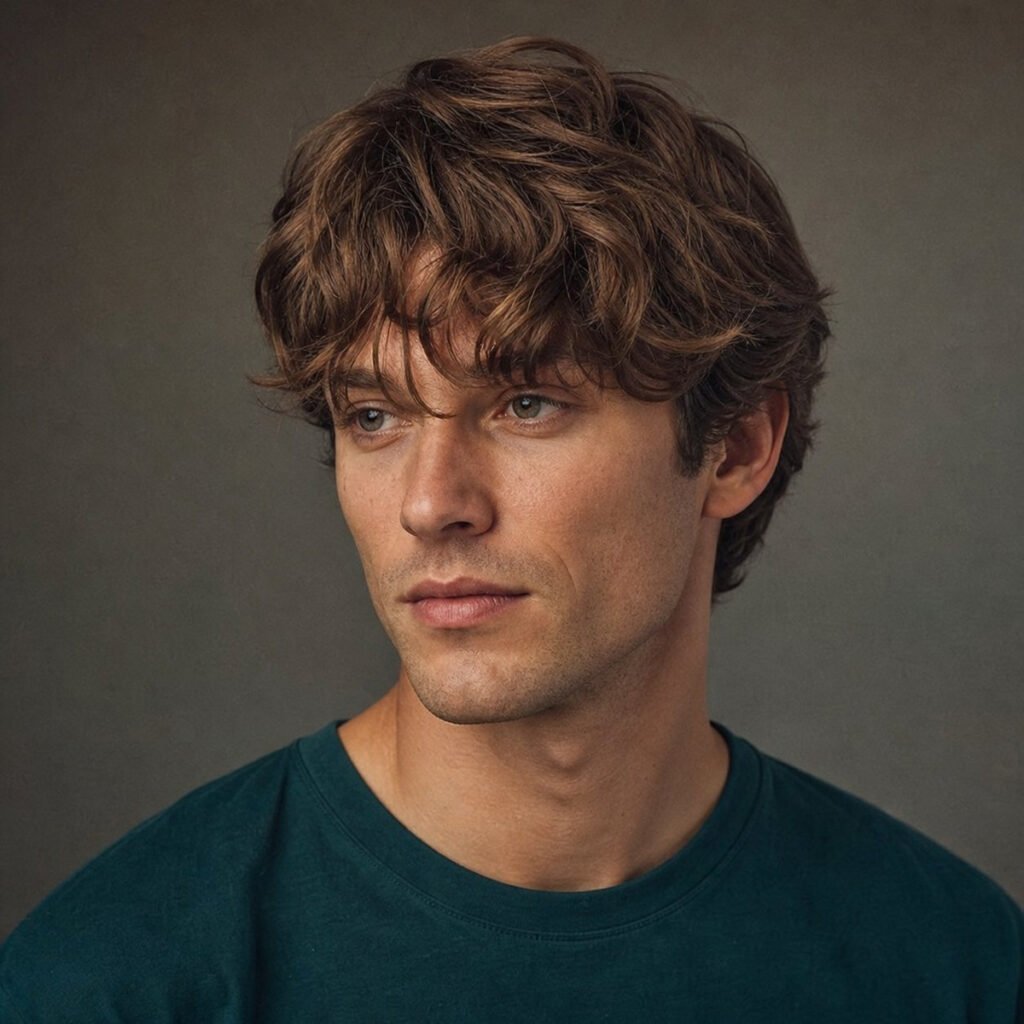
Waves fall into a relaxed fringe on their own, so the barber mostly thins weight and keeps three inches or more on top. It suits wavy hair of medium density and a round face, since the movement adds height. Skip the brush, scrunch in a bit of salt spray and let the messy fringe form itself.
Coily Textured Fringe
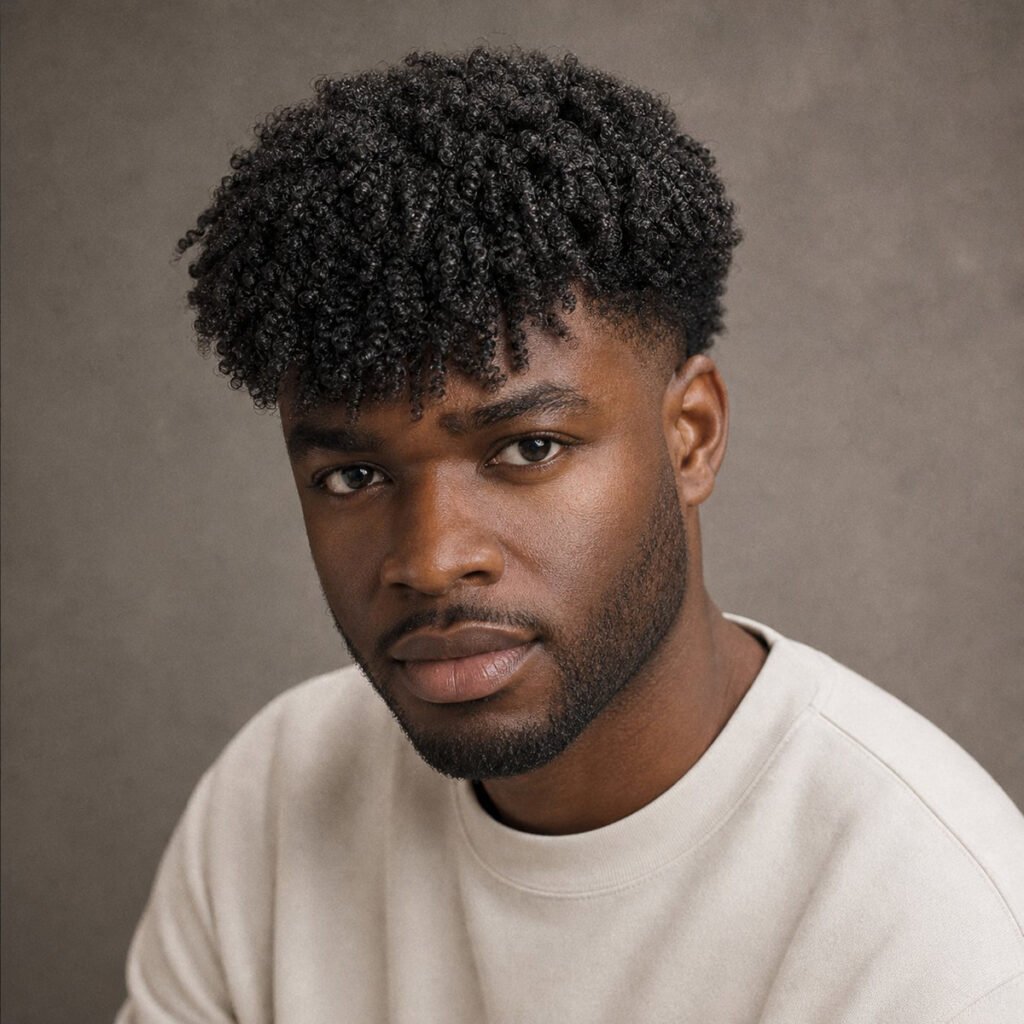
Tight coils sit in a soft shaped fringe over a clean low taper, with the front edge lightly picked into an even line. It suits dense coily hair and works on most face shapes, especially a heart shaped face when kept slightly lighter at the front. Keep the hair moisturized daily, because dry coils lose definition and look uneven.
High Taper Textured Fringe
A high taper starts above the temple, so the sides are shorter and the fringe stands out as a separate shape. It is for men with thick or wide sides who want a bolder contrast than a low cut gives. Keep in mind it grows out faster and shows more skin around the ears.
High Taper Choppy Fringe
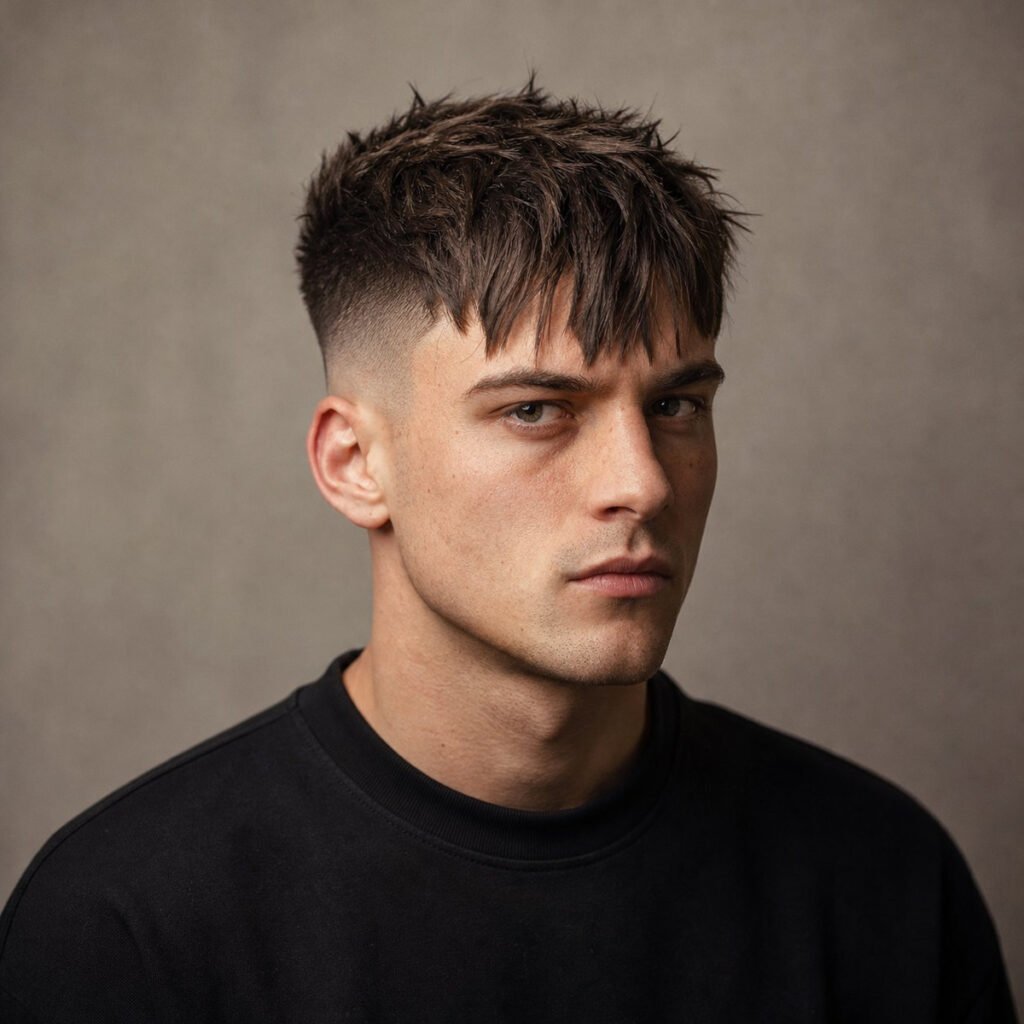
This look pairs short high sides with a three inch top cut into loose, choppy pieces that fall forward. It suits thick straight or wavy hair on an oval face or square face, while an oblong face is better off with a lower taper. Tell your barber exactly where the taper starts, and book a tidy up every few weeks.
High Taper Heavy Brow Fringe

The fringe is left heavier and sits right at the brow over very clean, short sides. It suits dense hair and a strong jaw, because the weight on top balances the tight sides. Use matte paste to separate the heavy front so it does not clump into one block.
Low Taper Textured Fringe Blowout
A blowout lifts the top up and forward so the fringe looks full instead of flat. This category is for men with medium to long tops who will spend a few minutes with a dryer each morning. Choose by hair density, since fine hair and thick hair want very different amounts of lift.
Fluffy Blowout Fringe
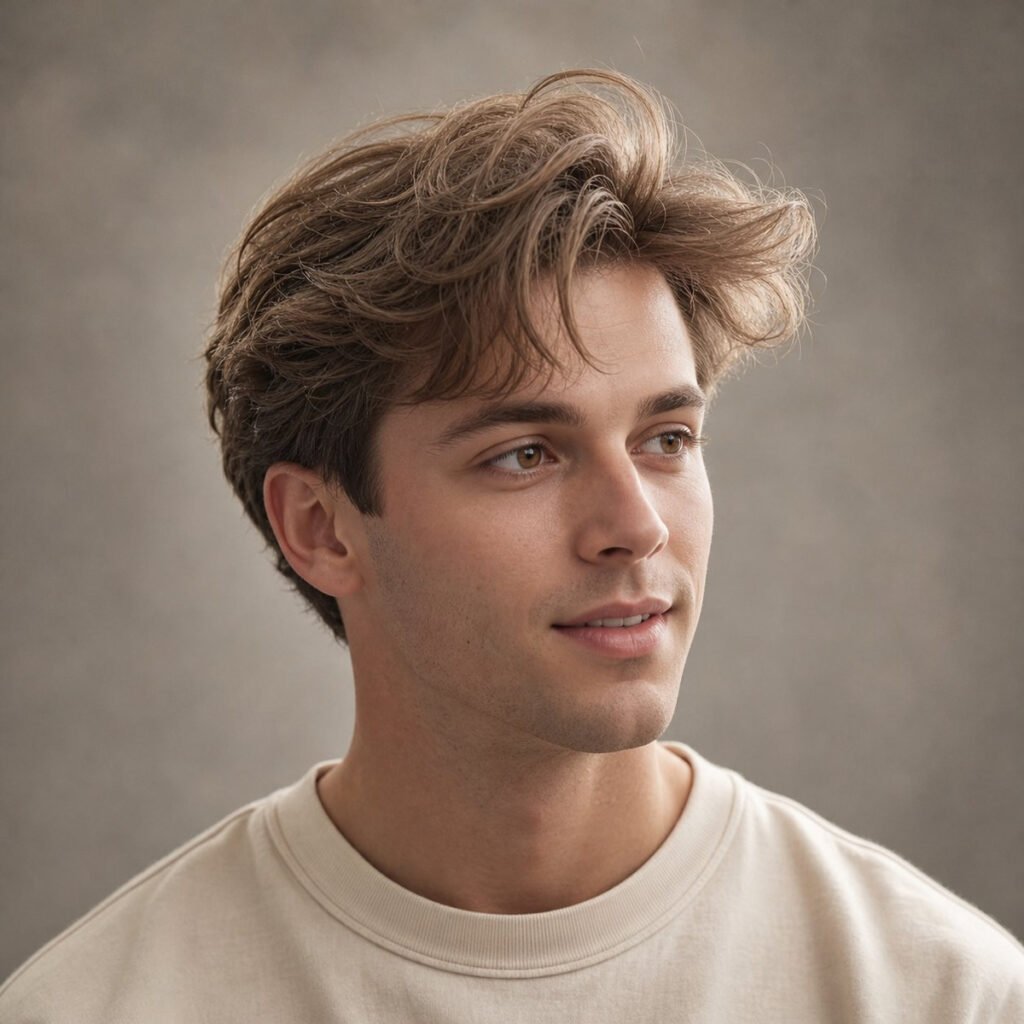
The top is dried upward and forward into a soft, airy shape, with the low taper keeping the outline clean around the ears. It suits wavy or medium thickness hair on a round face or oval face, where the lift adds length. Dry the roots first, then finish with a light hold spray so it stays soft.
Messy Blowout Fringe

This one is dried with more chaos, leaving pieces pointing different ways for a relaxed, slept on feel. It suits thick hair and a square face, where the relaxed fringe style softens strong angles. Use a diffuser or your fingers and a little texture spray, and avoid combing it once it is dry.
Airy Blowout for Fine Hair

Fine hair gets shorter layers and a lifted front so the fringe looks denser than it is. It suits thin or straight hair on an oval or oblong face when kept at a modest height. Rough dry with root lift and add powder at the crown, since heavy cream will flatten it.
Low Taper Textured Fringe Short
Short versions keep everything compact, with less hair to style and less to go wrong. This category is for busy men, athletes and anyone with fine or thinning hair. Decide how much forehead you are comfortable showing, because shorter fringes expose more of it.
Short Choppy Fringe
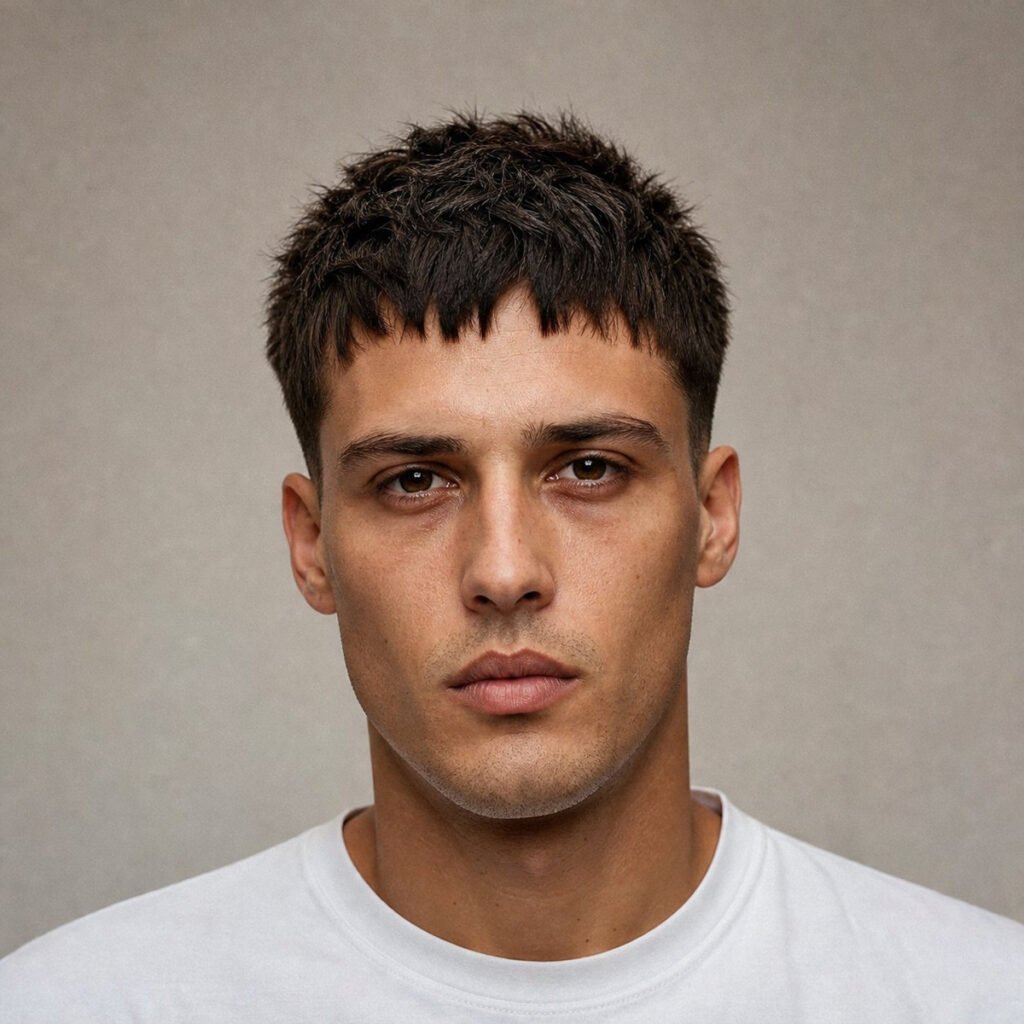
The top sits at about two inches with a fringe just above the brows, cut with plenty of broken texture. It suits fine, straight or wavy hair on an oval or round face shape. Rub a pea sized amount of clay between your palms and push it forward from the back.
Micro Fringe

The fringe stops around mid forehead and is cut in tiny uneven pieces over a tight low taper. It suits strong cheekbones and an oval face, and it asks for confidence because the upper face is fully on show. Ask your barber to keep it uneven at the tips and keep product minimal so the pieces stay separate.
Textured Fringe Low Taper Fade
This is the full recipe in its plainest form, the version most barbers think of when you say the name. It is for men who want the core cut with only small personal tweaks. Pick the length first, because everything else follows from where the fringe lands.
Classic Medium Length Fringe
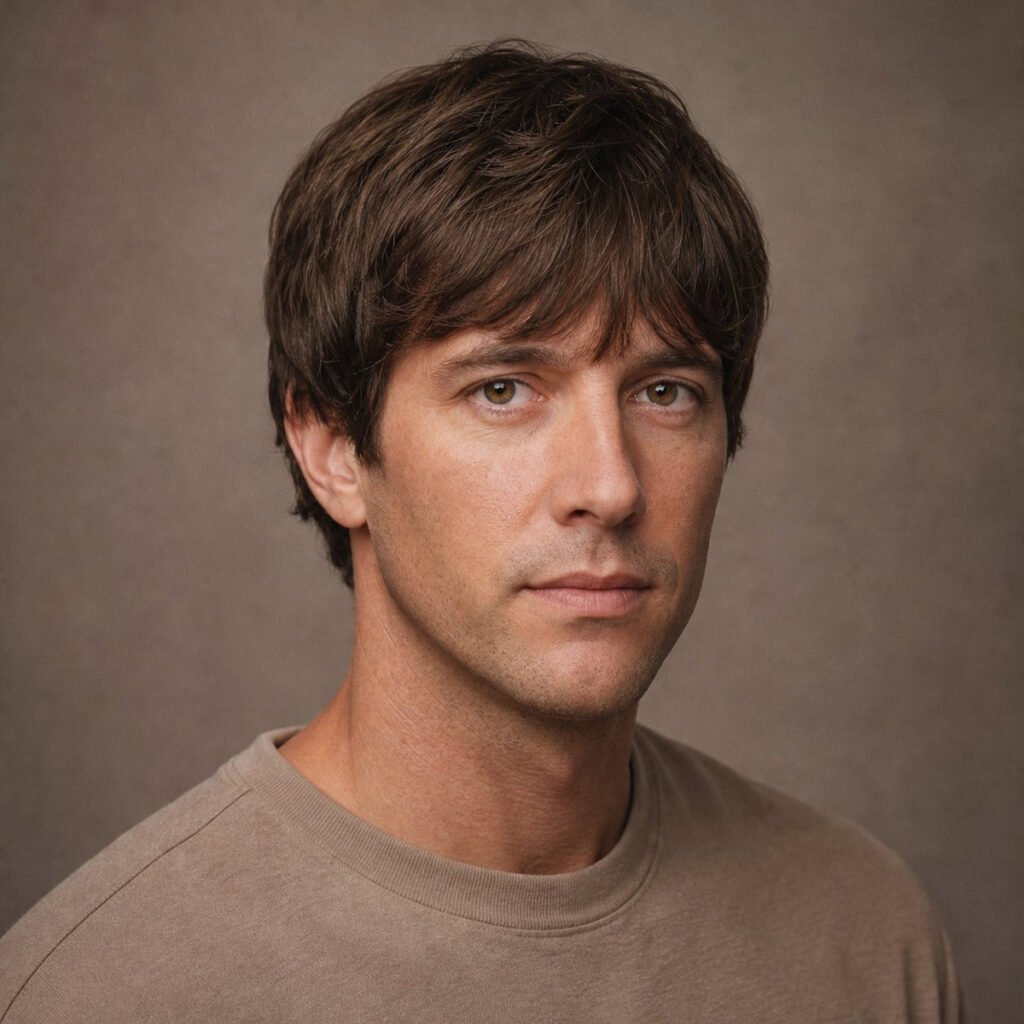
You get about three inches on top, a fringe that touches the eyebrows and a low fade style blend that begins just above the ear. It suits oval, square and round shapes alike and needs only a couple of minutes to style. Ask your barber whether the edge should keep some length or go to skin, because that choice changes how sharp it looks.
Long Textured Fringe

The front is left long enough to sweep aside, tuck behind the ear or push back, with layers cut through the top. It suits wavy or thick hair and balances a strong jaw on a square face. Plan on regular trims so it does not drop into your eyes, and ask for long layers with the sides kept tight.
Conclusion
The low taper textured fringe works because it combines a tidy tapered edge with a top that does not need perfect styling. Pick the fringe length for your face shape and hair type, then tell your barber where the taper starts and how the top should be cut. Use light styling products like matte clay or sea salt spray, and book your next trim before you leave.
FAQ
Most questions about this cut come down to the same few details. The answers below are short so you can screenshot them for your next appointment. If you are unsure about something, ask your barber to show you in the mirror before they start.
What is a low taper fade with a textured fringe?
It is a men’s cut with short, blended sides starting low near the ear and nape plus a choppy fringe on top that falls toward the forehead.
What is the difference between a low taper and a mid taper?
A low taper starts just above the ear for a softer look, while a mid taper starts around the temple and gives more contrast.
What should I tell my barber?
Say low taper starting above the ear, point cut top, fringe at the eyebrows, and whether you want the edge to keep length or go to skin.
Which face shape suits this cut best?
It suits most shapes, with a longer or side swept fringe helping round faces and a heavier brow fringe helping long ones.
How often should I get a trim?
Every three to four weeks keeps the taper crisp, and the fringe may need a quick tidy sooner if it reaches your eyes.
What products work best for a textured fringe?
Matte clay, texture powder and sea salt spray give grip and movement without shine, while heavy gels and glossy pomades clump the pieces.
Step 4: Meta Description
Low taper textured fringe guide: 20 looks, face shape picks and exact barber instructions so you walk out with the cut you wanted. (130 characters)
Step 5: Featured Image Prompt
Photorealistic editorial photo of a young man in his mid twenties seen in three quarter profile inside a modern barbershop, showing a low taper fade with soft blended sides starting just above the ear and a medium length textured fringe falling to the eyebrows in choppy, separated pieces. Natural brown hair, slightly tousled, matte finish with no shine, visible point cut ends. He wears a plain charcoal crewneck sweater and looks slightly off camera with a relaxed, confident expression. Warm soft window light from the left with gentle rim light on the hair, shallow depth of field, blurred background of leather chairs, mirrors and wood shelving in muted tones. Clean, premium, magazine style mood, sharp focus on the hairline and fringe texture, subtle film grain, 16:9 aspect ratio, space on the right side for a text overlay.
One note: I read “3 lines” as three sentences per block, since real line breaks change with screen size. The article contains no bullets, numbered lists or dashes, and none of the five competitors back their figures, so I kept guard numbers out and told readers to specify the edge with the barber.
