

A mullet fade pairs tight, faded sides with length that falls past the nape, and it is the cleanest way to wear a mullet haircut right now.
The one line that makes every version work is where the fade ends: it should stop behind the ear and never wrap around the back of the head.
Below are 20 mullet fade haircut ideas sorted by length, fade height, hair type, and grooming style so you can walk into the barbershop with a plan.
Mullet Fade Haircut Men
This category covers the everyday men’s mullet haircut, the version most guys picture when they ask for a faded mullet. It suits anyone who wants visible contrast between short sides and a longer back without going to an extreme. Before choosing, decide how often you will sit in the chair, because the sharper the fade, the sooner it needs a refresh.
Classic Mid Fade Mullet
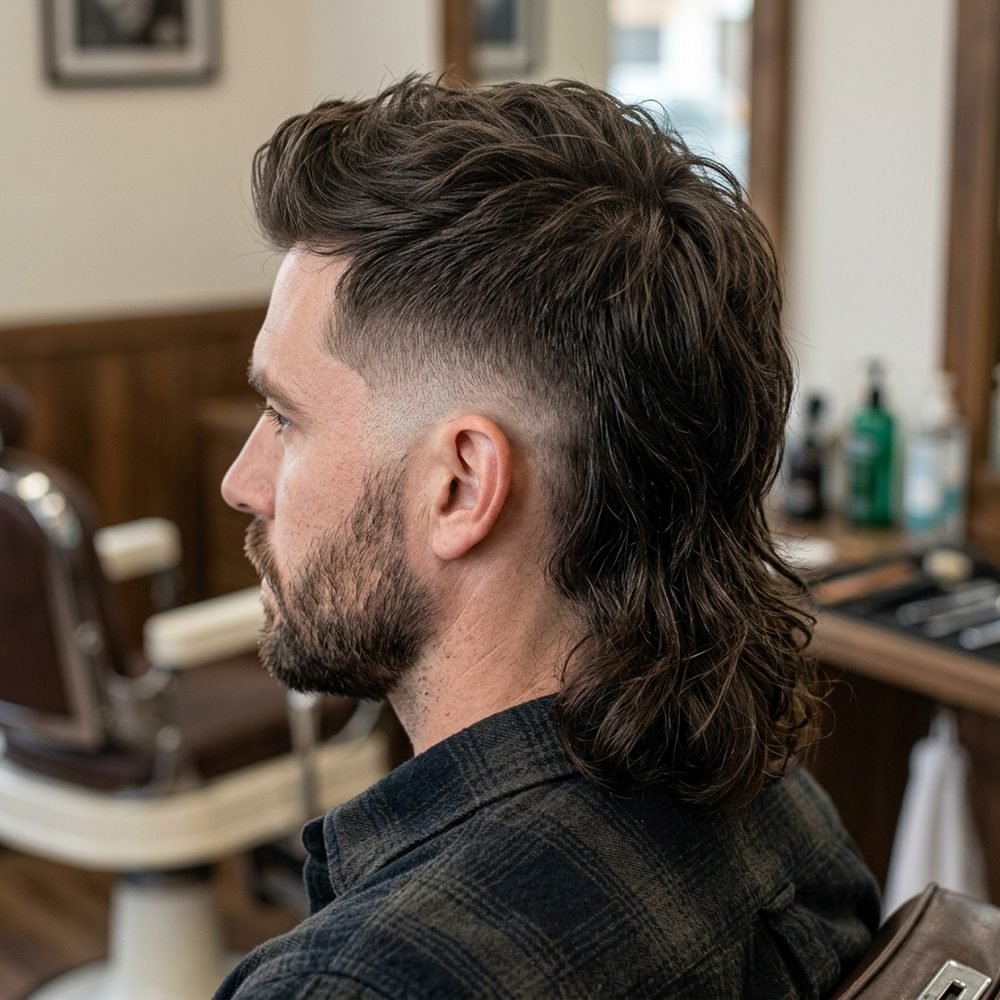
The mid fade mullet takes the sides to skin near the bottom and blends up to the temple, with a textured top and a back that touches the collar. It suits straight and wavy hair and works on oval and square faces, where the contrast sharpens the jawline. Tell your barber the fade must end behind the ear, and plan a tidy up every two to three weeks to keep the blend crisp.
Textured Fringe Mullet Fade
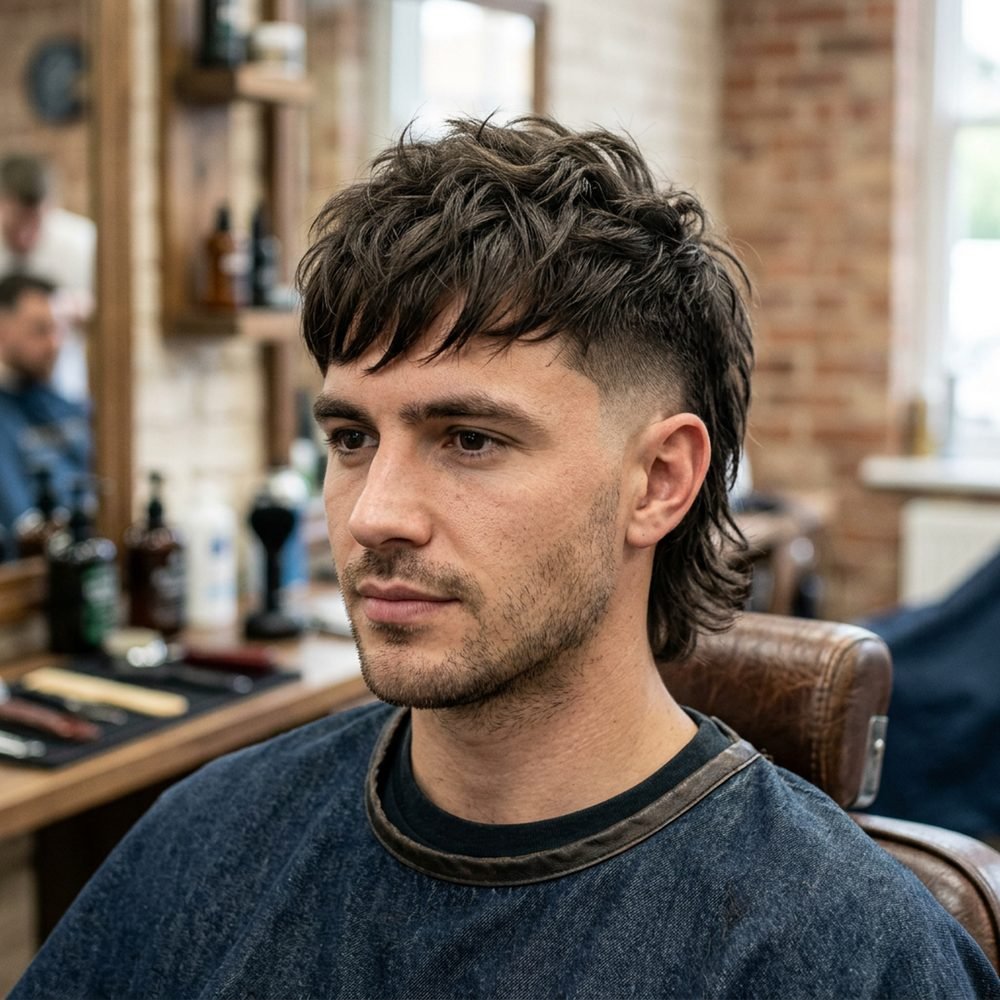
This version pushes a choppy fringe forward over the forehead while the faded sides stay clean and the back runs long. It flatters round and long faces because the fringe breaks up the forehead and the fade removes bulk at the ears. Work a pea sized amount of matte clay through the fringe and leave the back loose so the textured mullet keeps its movement.
Mullet Fade Haircut Short
A short mullet keeps the back just past the nape or the collar line, so the shape reads as subtle instead of dramatic. It suits office workers, students, and first timers who want a short mullet without months of grow out. When choosing, remember that a shorter back needs a gentler fade, since a high skin fade over a barely long back can look like an overdue regular cut.
Short Tapered Mullet
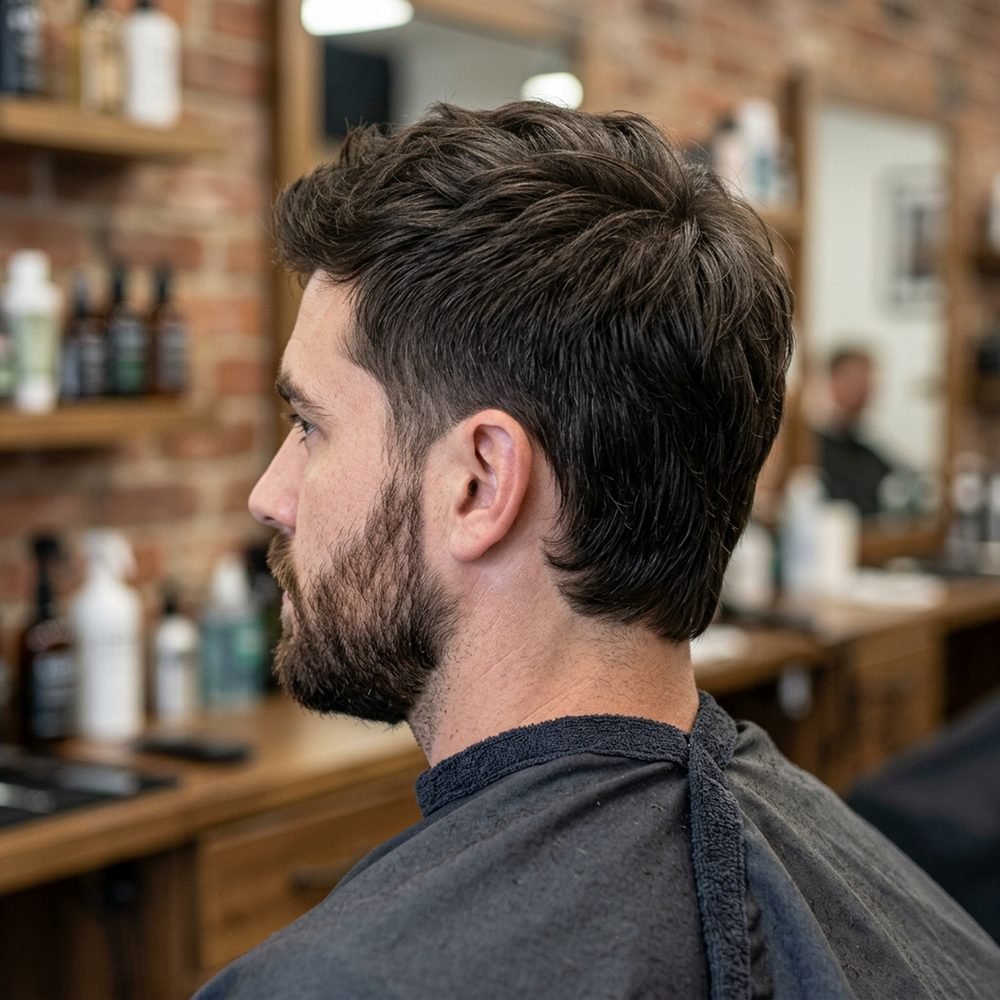
The short tapered mullet haircut cleans up only the sideburns, ear edges, and neckline, leaving the natural hairline and a back of roughly two inches. It is a strong pick for fine or thinning hair because the soft tapered sides do not expose the scalp. Ask for light point cutting on the back and use only a dab of cream, since too much product makes short lengths look greasy.
French Crop Mullet Fade
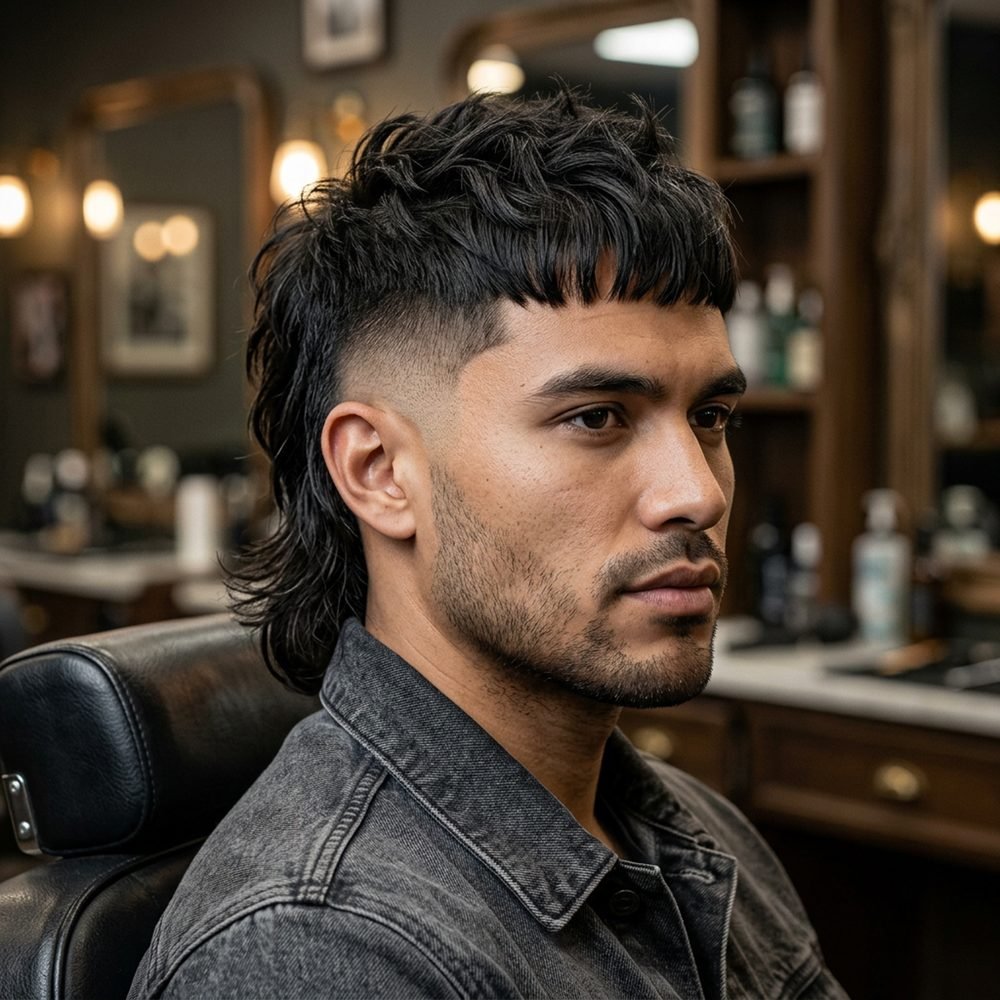
A cropped, blunt fringe sits above a mid fade, and a short tail finishes the back for a sharp, graphic shape. It suits thick straight hair and angular faces, especially for guys who like a tidy front with a bit of attitude behind. Use texture powder on the crop for dry grip, and book the fade refresh every two to three weeks to keep the line crisp.
Cropped Skin Fade Mullet
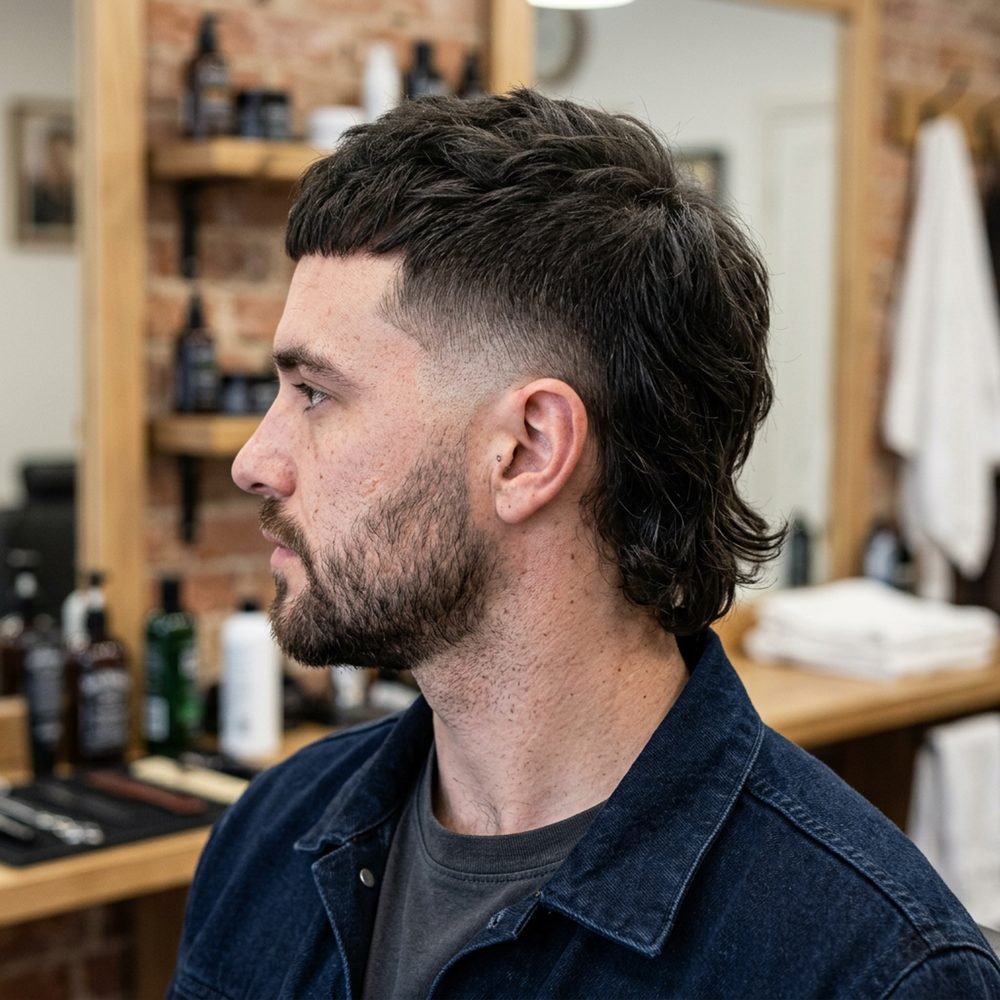
Here the shaved sides go to bare skin while the top stays short and textured, with a modest tail that skims the neck. It works on dense, dark hair where the contrast is obvious, and on guys who want a clean, sporty look. Skin fades soften within a couple of weeks, so schedule regular touch ups and moisturize the shaved areas to keep them comfortable.
Mullet Fade Haircut Low
Low fades and tapers sit close to the ear and sideburn, which makes them the quietest way to wear a mullet fade. They suit conservative workplaces, school settings, and anyone who gets cut about once a month. Choose this route if you want the mullet shape to show mostly from the side and back while the front stays understated.
Low Taper Mullet
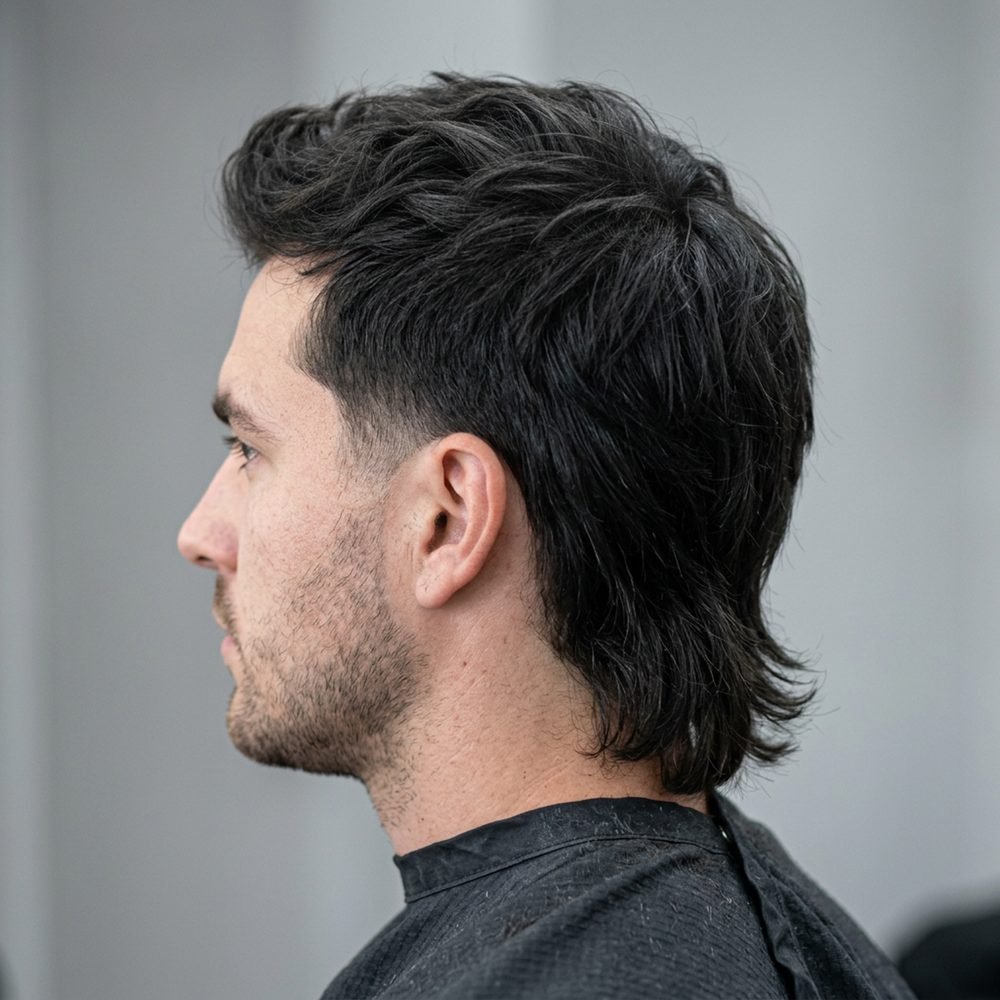
The low taper mullet shortens only the edge around the ears and nape, so no bare skin shows above the ear and the sides keep their hair. It fits wavy, thick, or medium texture hair and almost every face shape. Because a classic taper grows out gracefully, you can often stretch visits to four or five weeks, and a light spray of sea salt keeps the top from looking flat.
Low Drop Fade Mullet
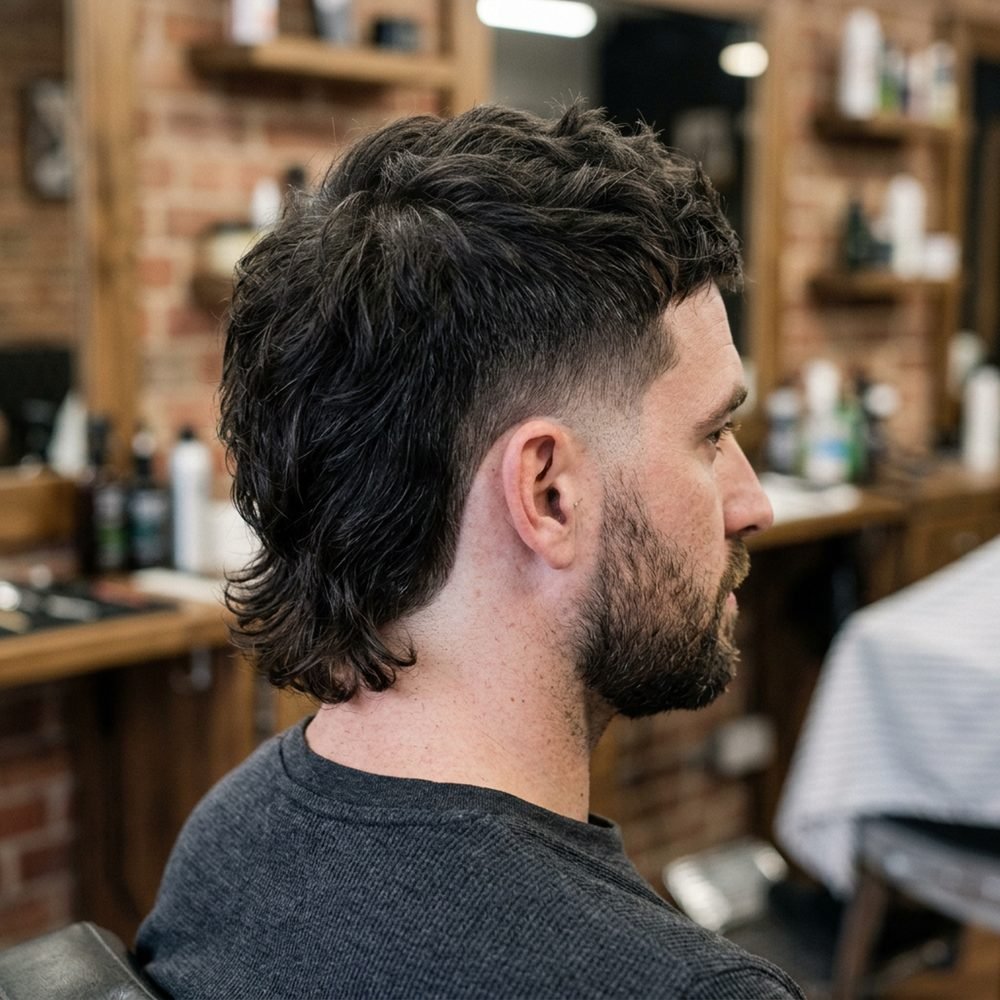
The drop fade mullet curves down behind the ear in an arc, which makes the long back look heavier and lower. A low drop fade suits wavy and curly hair, and it flatters round faces by adding length through the neck. Ask your barber to follow the curve of your skull instead of a straight line, and condition the back so the longer hair stays soft.
Modern Mullet Low Fade
A modern mullet with a low fade swaps the harsh contrast of the old shape for blended sides and plenty of texture on top and back. This group is for guys who want a contemporary mullet that looks styled rather than overgrown. When choosing, focus on layering, since the cut lives or dies on how the longer sections move.
Layered Low Fade Modern Mullet
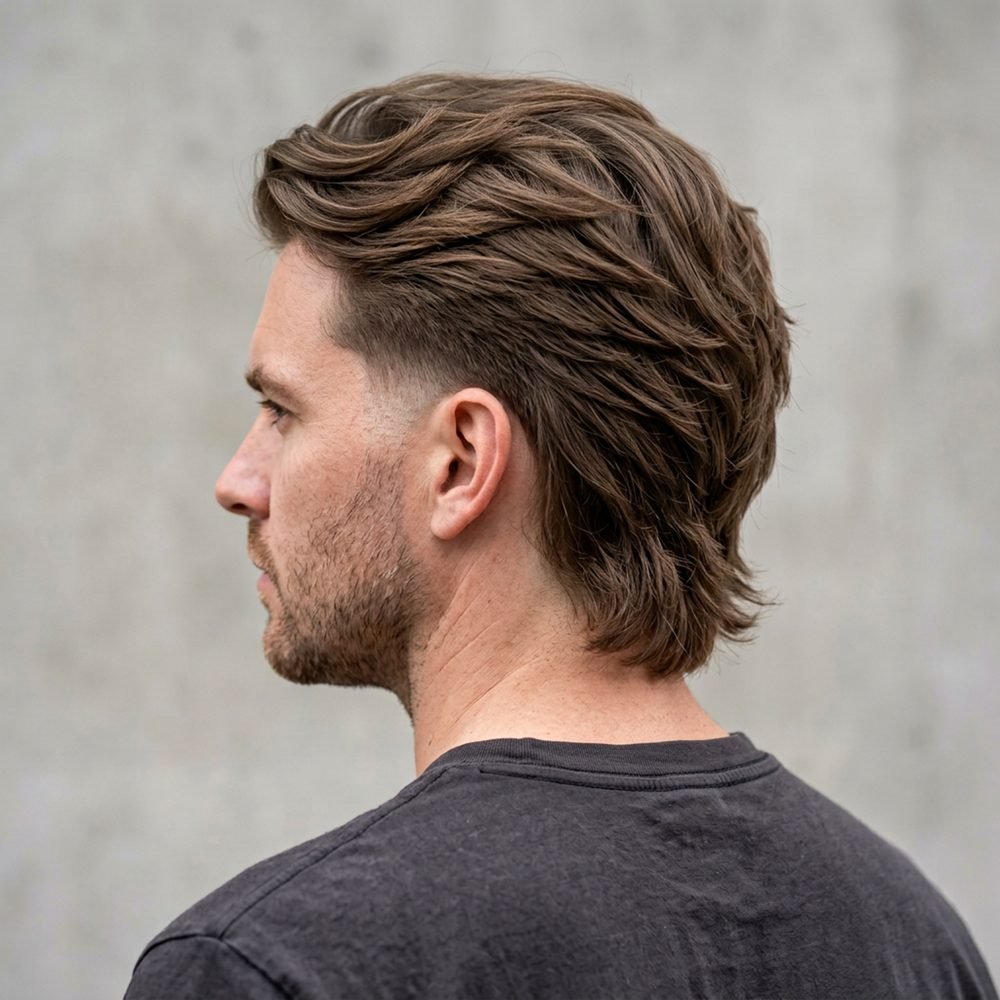
Soft layers through the crown and back sit above a low fade mullet base, which stops the length from hanging in one heavy sheet. It suits wavy and straight hair with enough density to hold layers, and it frames oval and heart shaped faces well. Blow dry with your fingers and finish with a little paste so the layers separate without looking stiff.
Curtain Low Fade Mullet
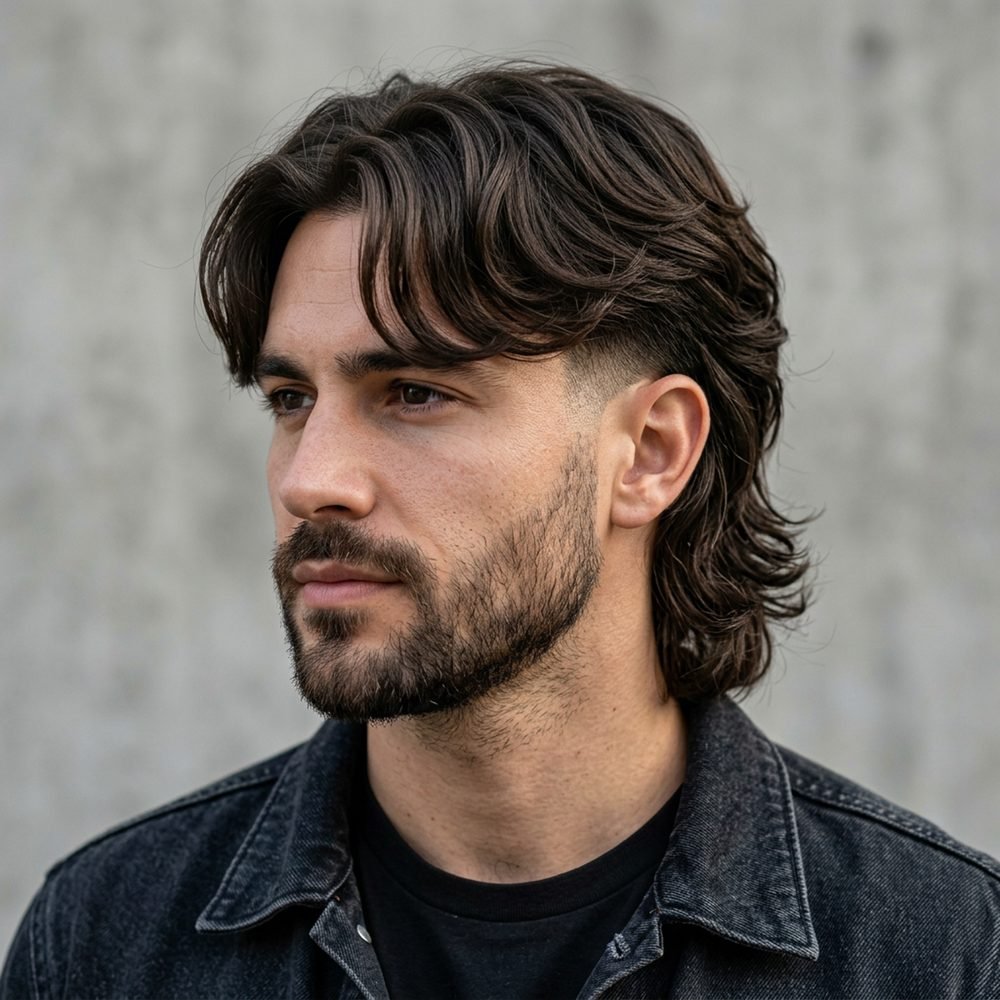
A center or soft side part lets the top fall in curtains around the face while a low skin fade trims the ears and the back flows long. It suits medium length top hair and long faces, since the curtains add width. Dry the top away from the part and skip heavy gel, which pulls the curtains flat.
Modern Mullet Fade Haircut
These looks push the mullet into bolder territory, with clear choices about fade height, volume, and shape. They suit guys who already know they like the style and want more personality. Think about your hair density and how much daily styling you will tolerate, since these cuts reward effort.
Wavy Modern Mullet Fade
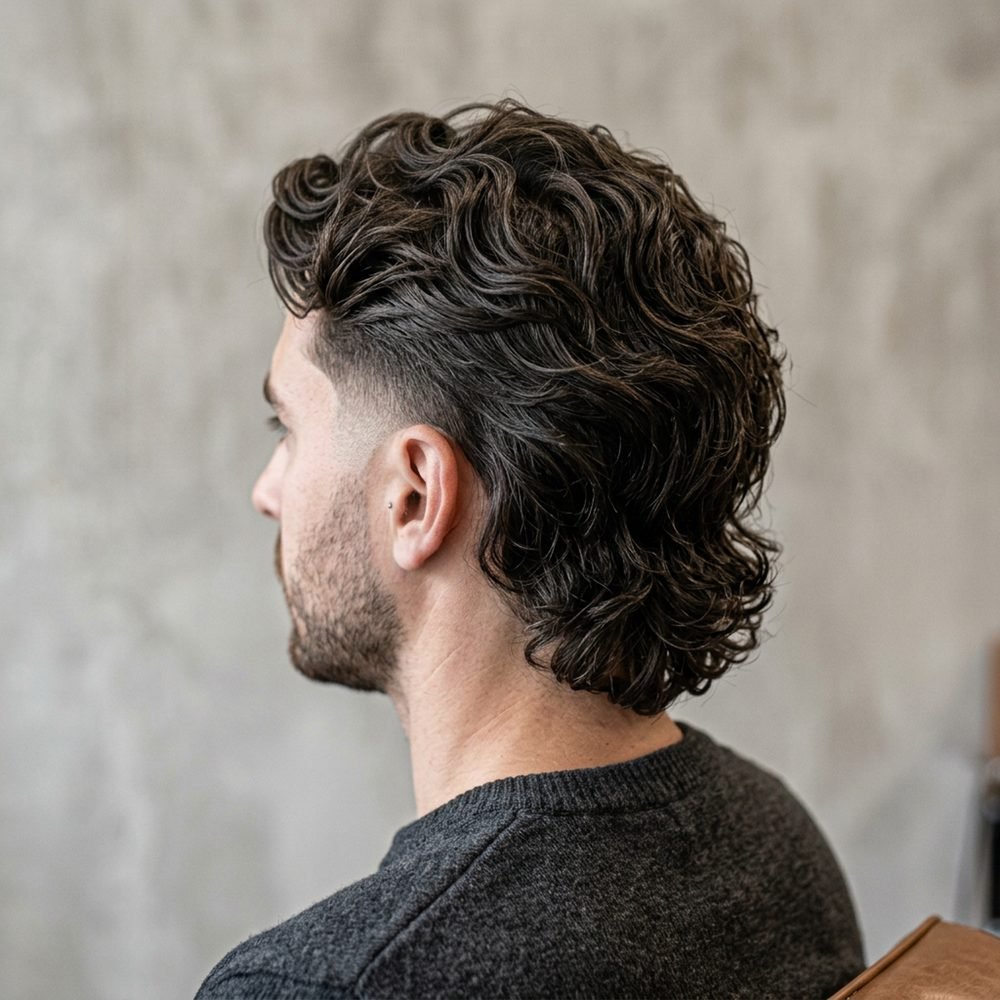
The wavy hair mullet is the easiest version to wear: the waves flick out at the back, the top holds shape with little help, and any fade height works. It suits medium to thick textured waves and nearly every face shape. Scrunch a curl cream or sea salt spray into damp hair and let it air dry to keep the pattern intact.
High Fade Mullet
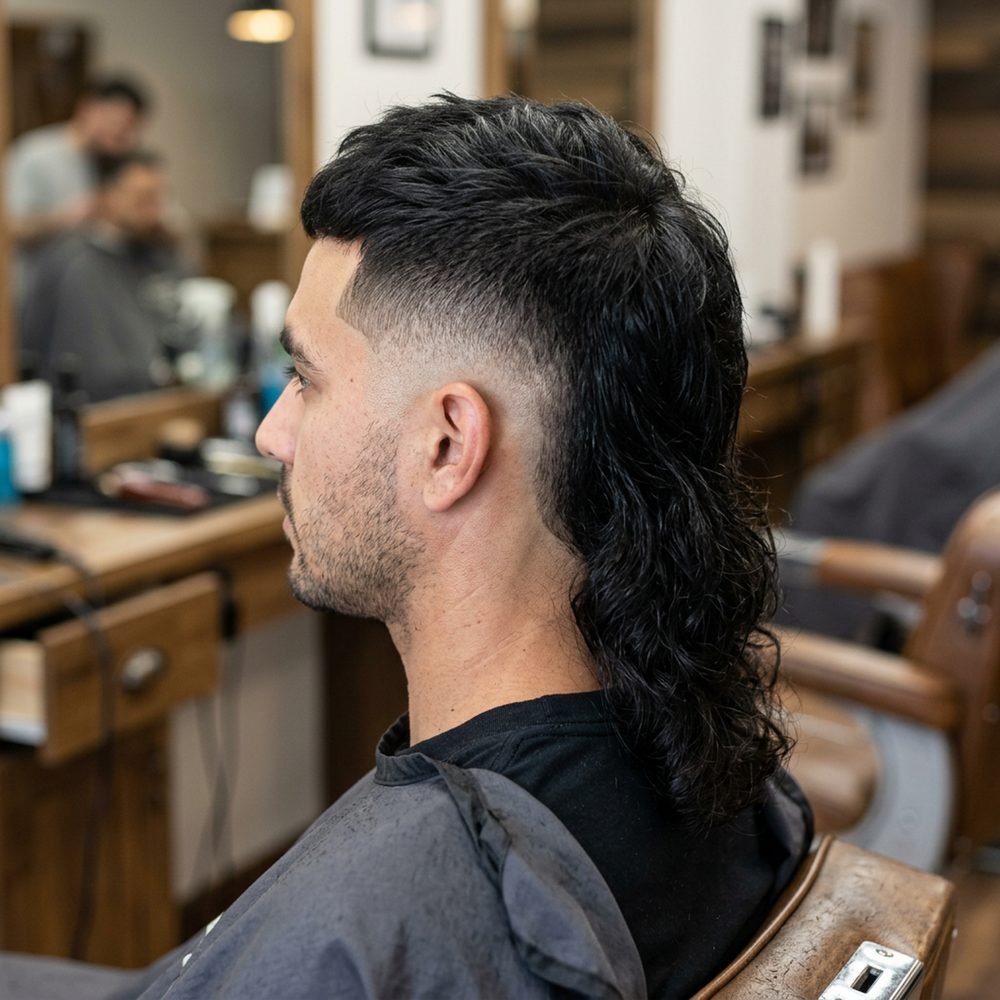
The high fade mullet takes the sides to skin almost to the top of the head, which makes the back look dramatically longer. It suits strong angular faces, thick hair, and guys who want a dramatic mullet with maximum contrast. Expect a visit every two weeks, because a high fade shows regrowth quickly.
Wolf Cut Mullet Fade
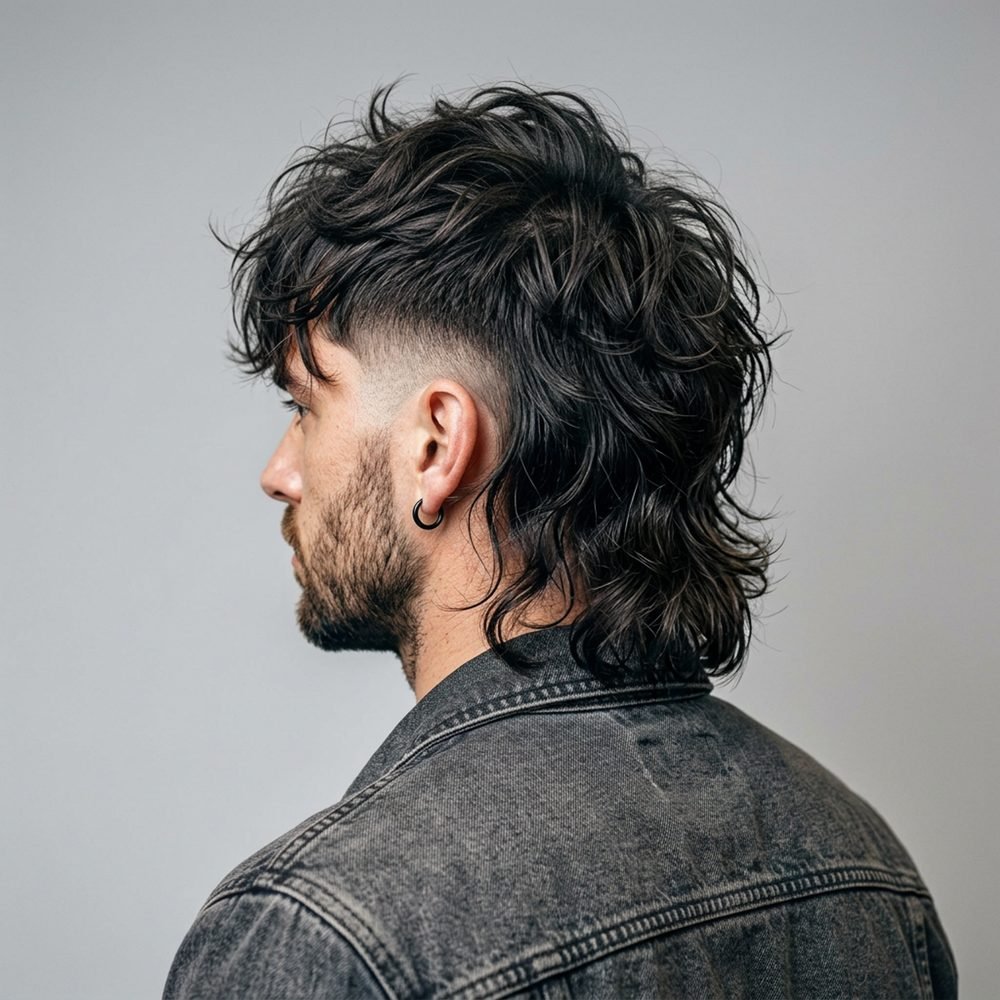
This hybrid borrows the shaggy layers and crown volume of a wolf cut, then adds a fade on the sides to control bulk. It suits thick wavy hair and round or square faces that benefit from height on top. Ask for a layered mullet with point cutting, and use texture powder at the roots to keep the volume lifted.
Mullet Fade Haircut Curly
Curly hair gives a mullet fade natural volume and a defined back with very little styling. This section is for anyone with coils, ringlets, or tight waves who wants natural curls to take center stage. When choosing, ask for length measured on wet hair, because curls spring up as they dry.
Curly Mid Fade Mullet
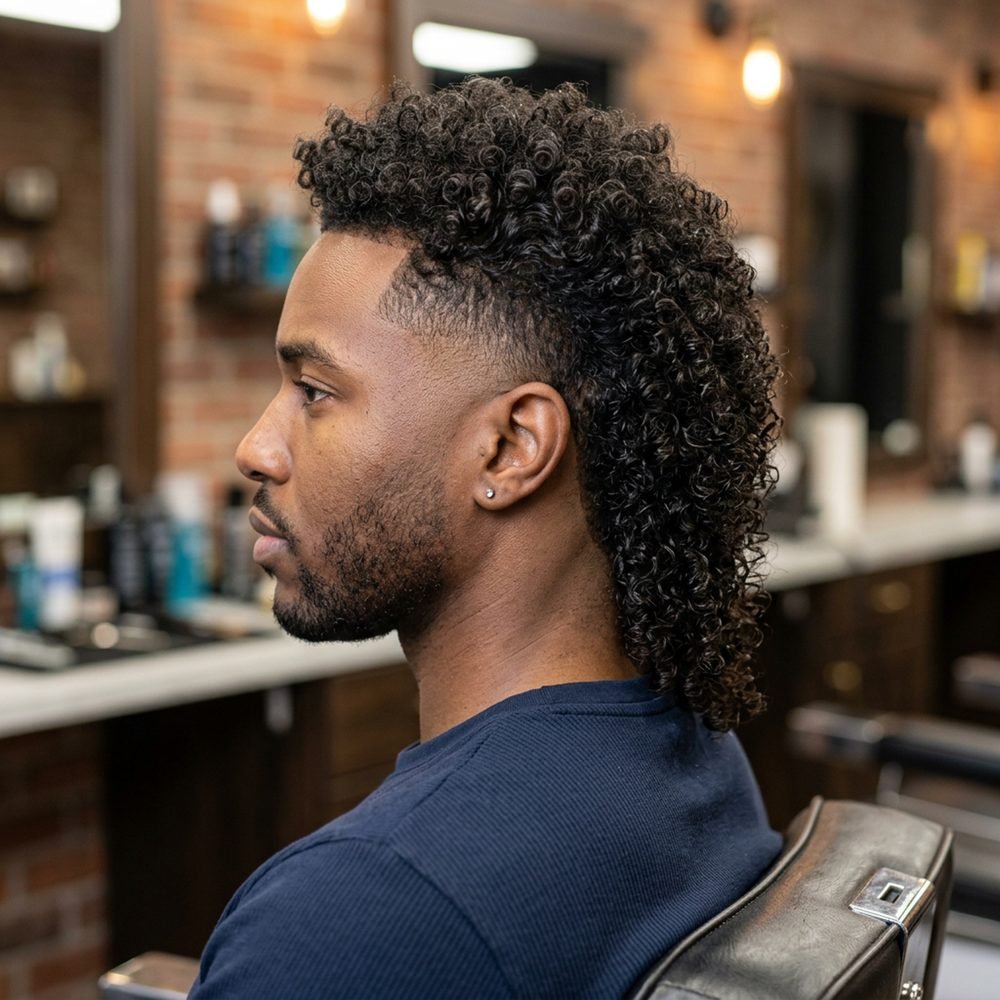
The curly hair mullet with a mid fade keeps the sides short and lets full curls stack on top and fall at the nape. It suits ringlets and coils and works well on round and oval faces. Use a leave in conditioner and diffuse on low heat so textured curly hair stays defined instead of frizzing.
Permed Mullet Fade
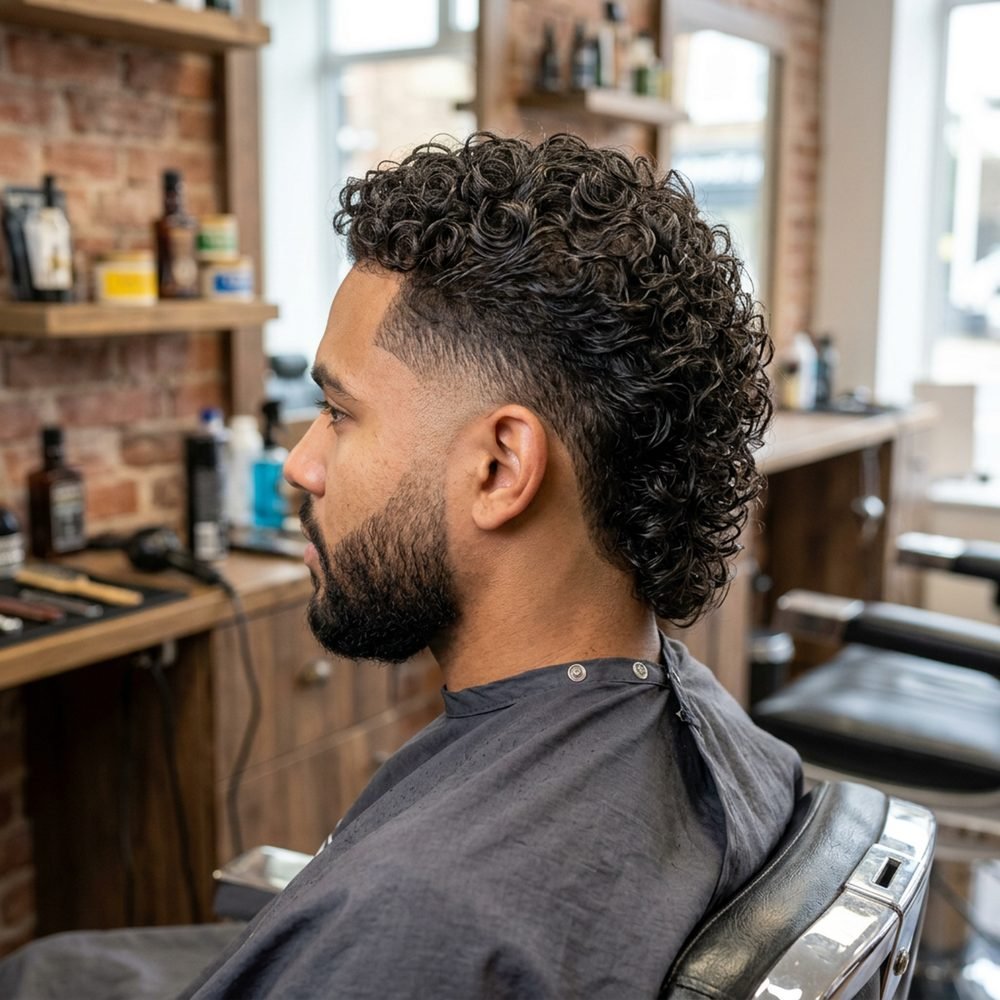
A light perm adds curl and volume to straight hair, and the faded sides keep the shape neat around the ears. It suits straight or fine hair types that want a curly mullet haircut without a natural pattern. Perms need gentle care, so skip harsh shampoos and use a hydrating mask to keep the curls springy.
Fluffy Curly Taper Mullet
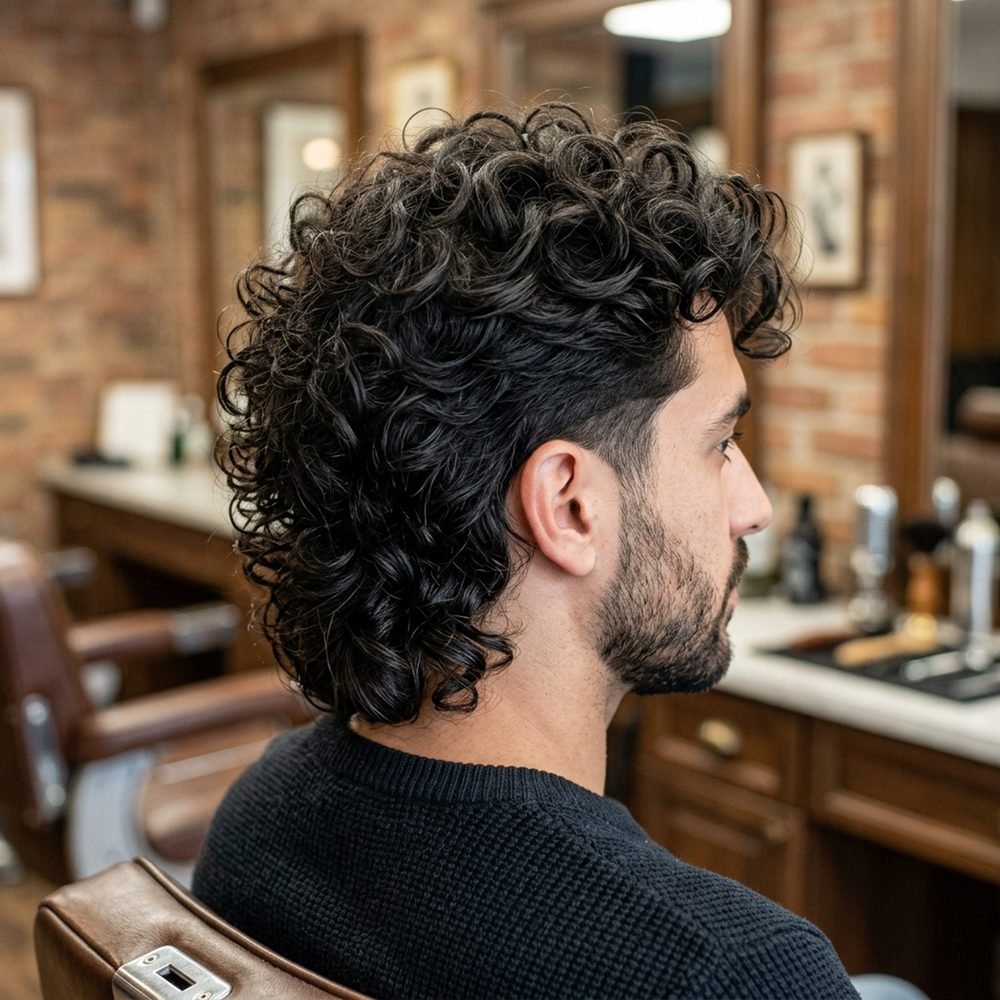
A soft taper replaces the skin fade here, surrounding big, fluffy curls on top and a rounded tail at the back. It suits thick curly or wavy hair and anyone who wants a curly men’s hairstyle that still looks tidy. Pick it if you prefer a relaxed finish, and detangle gently with a wide tooth comb when the hair is damp.
Burst Fade Mullet Haircut
A burst fade curves in a semicircle around the ear and leaves the hair above the temple and behind the ear long. It is a popular mullet pairing because it adds skin contrast without taking the whole side. Pick this category if you want a rounded, intentional shape, and bring a side profile photo so your barber can see the arc.
Classic Burst Fade Mullet
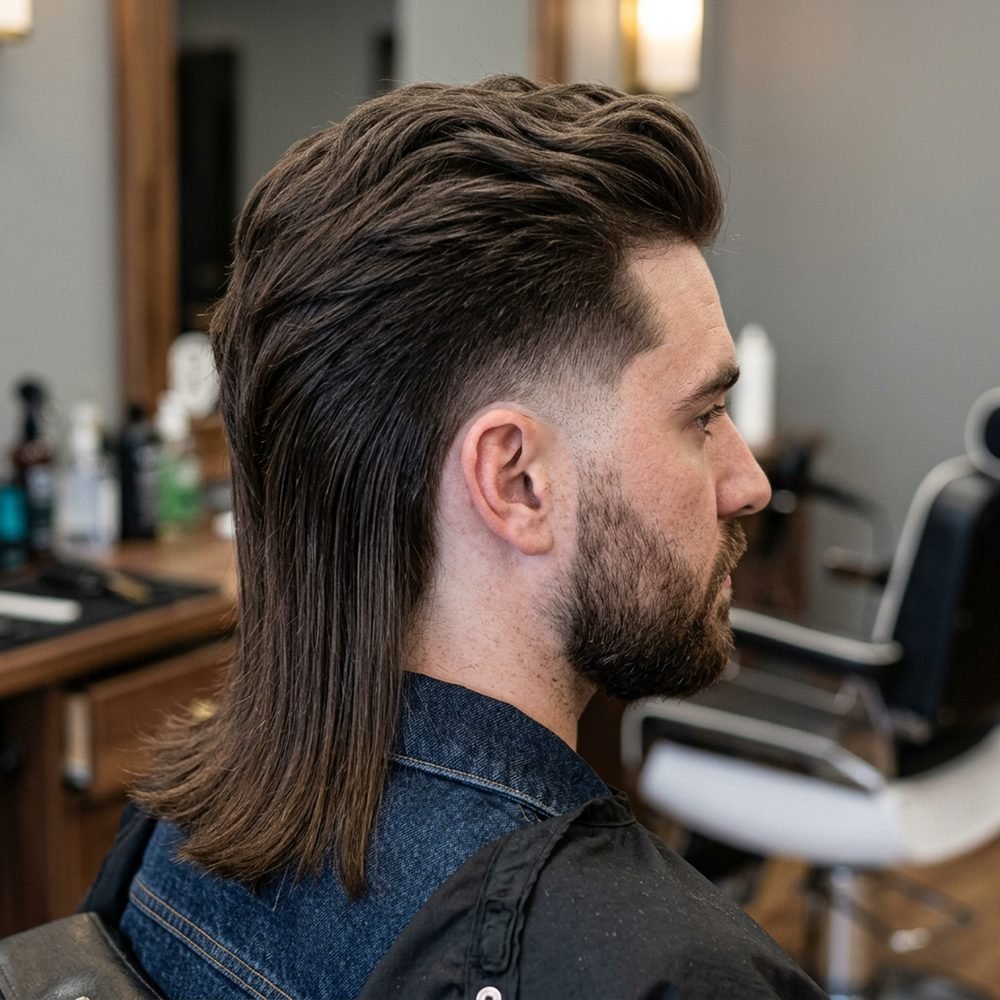
The burst fade mullet shows a clean arc of short hair around each ear with a textured top and a back that falls past the collar. It suits straight, wavy, and curly hair, and it works well on oval and round faces. Ask the barber to keep the semicircle fade tight to the ear and to leave the nape long.
Curly Burst Fade Mullet
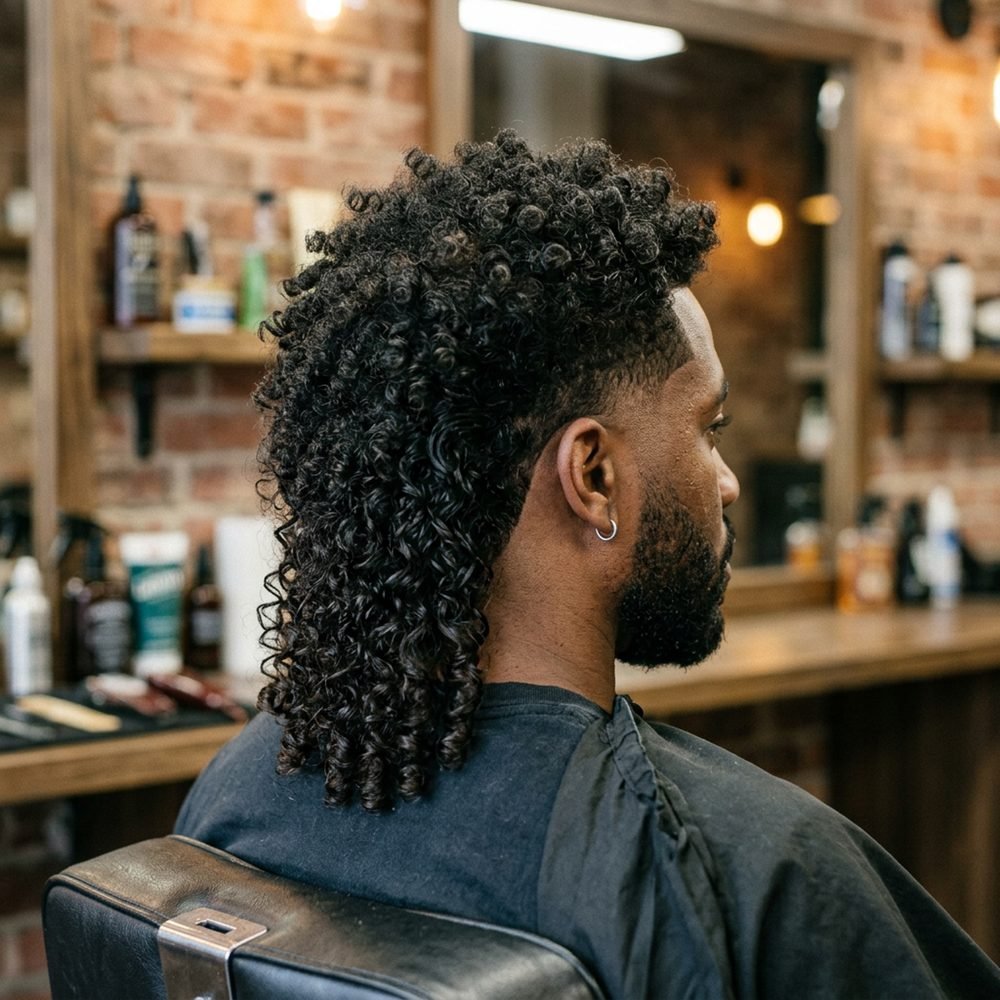
The curly burst fade is a standout match for tight curls, because the short arc frames the ear while the curls keep all their volume. It suits natural coils and ringlets and gives a high contrast silhouette. Apply a cream to damp curls and diffuse the top so the shape stays defined next to the clean fade.
Low Burst Fade Mullet
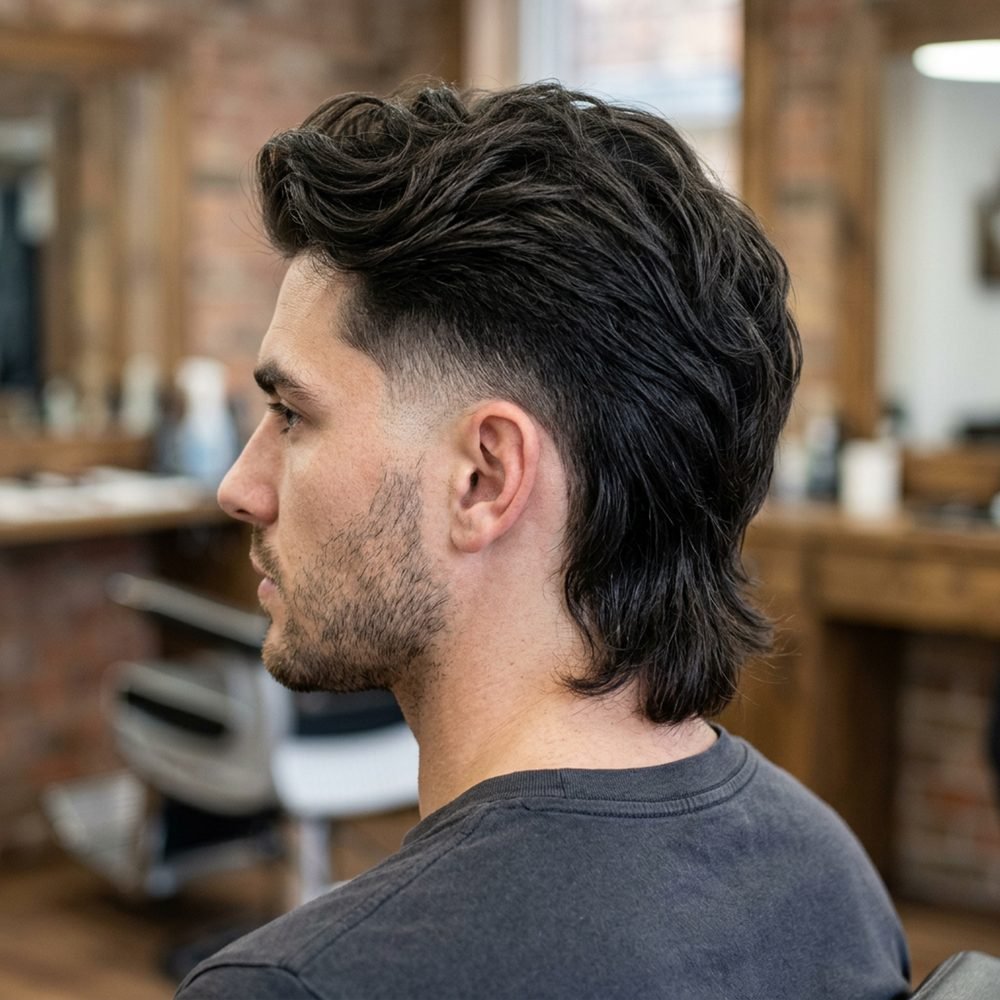
A low burst fade keeps the semicircle small and close to the ear, blending into the hair above for a subtler burst taper look. It suits first timers, wavy hair, and workplaces that prefer less contrast. Because the arc is small, it grows out softly, so you can often wait a few weeks before the next visit.
Mullet Fade Haircut With Beard
A beard changes the balance of the whole cut, so the fade on the sides should flow into the beard instead of fighting it. This section is for guys who want facial hair and a mullet at the same time. Choose by matching beard length to fade height, so the lower face and the sides read as one connected shape.
Mullet Fade With Full Beard
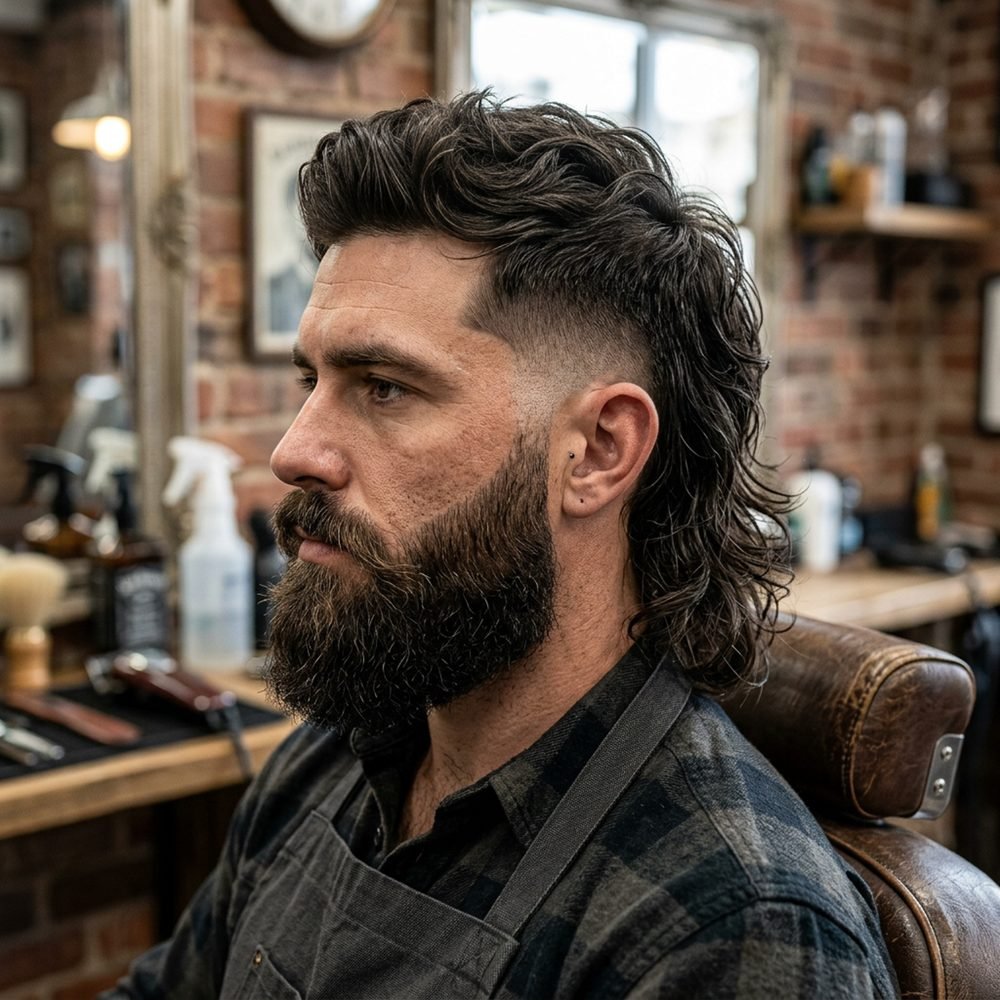
A full beard faded up into the sideburns blends into a mid or low fade, giving the face a strong frame under a textured top and long back. It suits oval and square faces and thicker hair. Brush the beard, add a little oil, and keep the neckline trimmed so the transition stays clean.
Mullet Fade With Light Stubble
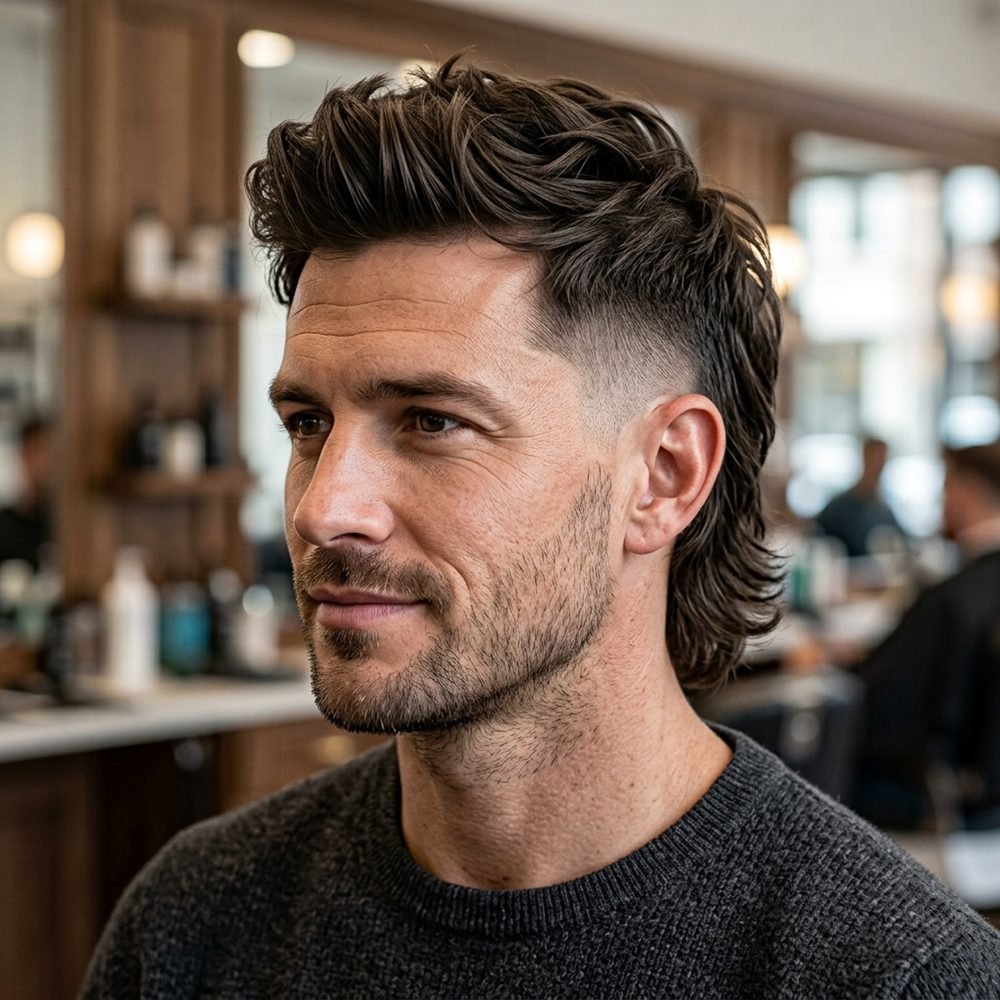
Short stubble adds definition without competing with the haircut, so it pairs well with a skin fade or a low fade mullet. It suits angular and round faces, and anyone with patchy growth who wants a tidy edge. Keep the stubble at one length with a trimmer and match the line to the sideburn.
Mullet Fade Haircut FAQs
These are the questions barbers hear most from people booking their first mullet fade. The answers cover length, upkeep, fade choice, and how to explain the cut. Use them as a quick checklist before your appointment.
What is a mullet fade haircut?
It is a modern men’s haircut with faded sides and a longer back, where the fade stops behind the ear.
How long should my hair be before I get a mullet fade?
Many barbers like at least three to four inches on top and four to six inches at the back, though a short version needs less.
How often should I refresh a mullet fade?
Plan on every two to three weeks for the fade, while the longer top and back can often wait six to eight weeks.
Which fade is best for a first mullet?
A low taper is the safest start because it grows out gently and looks fine in most workplaces.
Can a mullet fade work with curly or wavy hair?
Yes, since curls and waves add natural volume at the back, and burst or mid fades suit them especially well.
How do I ask my barber for a mullet fade?
Name the fade height, say the fade stops behind the ear, give the back length in inches, and bring a side profile photo.
Final Thoughts on the Mullet Fade Haircut
The best mullet fade haircut is the one that matches your hair type, your schedule, and your comfort with contrast. Start low if you are unsure, move up to a mid or burst fade once you know you like it, and keep the fade ending behind the ear. That one line is what turns a faded cut with a tail into a mullet that looks planned.
