
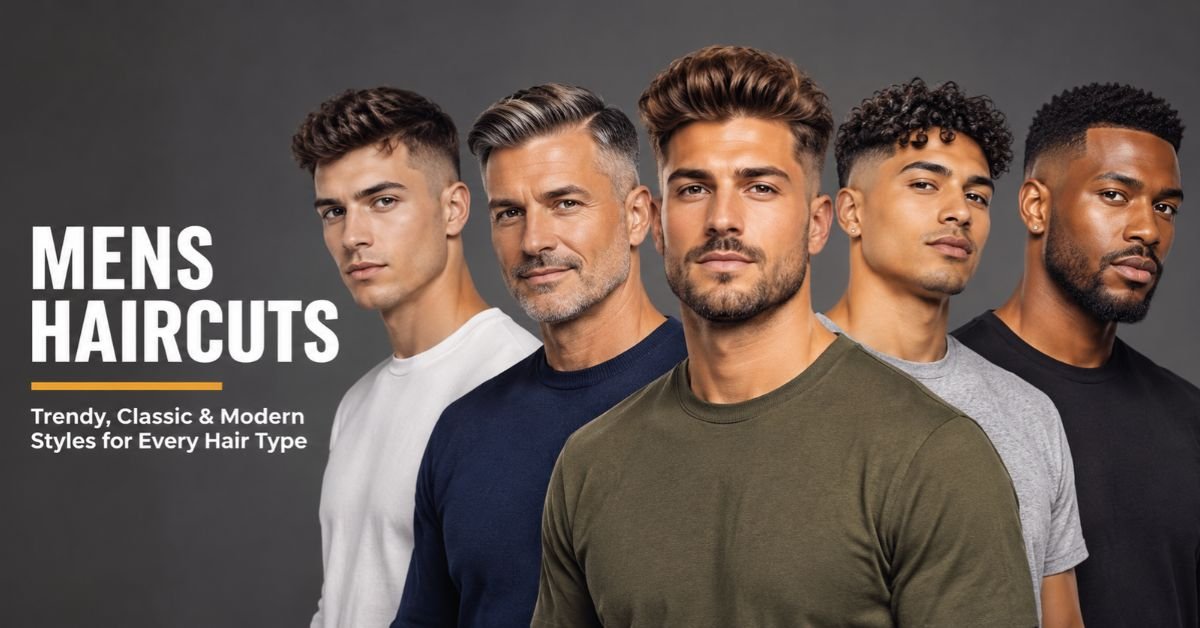
A good cut does more than tidy up your head. It sharpens your jawline, frames your features, and shaves minutes off your morning routine. Mens haircuts cover a huge range today, from crisp tapers and skin fades to loose, tousled tops that look effortless.
That variety is great news. It also makes the barber chair a little intimidating. This guide breaks down the most popular styles, shows you which ones flatter your face shape and hair texture, and gives you the exact words to use at your next appointment.
Quick Overview: Mens Haircuts at a Glance
| Detail | What to Know |
| Category | Short, medium, and long cuts, including fades, tapers, crops, and classic parted styles |
| Ideal hair length | Anywhere from a buzzed 1/8 inch to shoulder length |
| Suitable hair types | Straight, wavy, curly, coily, fine, and thick |
| Face shapes | Every shape has flattering options (covered below) |
| Maintenance level | Low for buzz cuts and crew cuts. High for sharp fades and pompadours |
| Styling difficulty | Beginner-friendly for crops and tapers. Moderate for quiffs and slick backs |
Understanding Modern Mens Haircuts
Every men’s cut combines three decisions: the sides and back, the top, and the finish. The sides and back might be faded, tapered, or scissor-cut. The top might be cropped, swept, or left long. The finish covers texture and product, from matte and messy to glossy and polished.
Men choose a cut for different reasons. Some want a low-effort routine. Others want a statement look for work or weekends. Hair density, growth patterns, and lifestyle should all steer the decision just as much as trends do.
15 Best Mens Haircut Ideas
1. Classic Taper
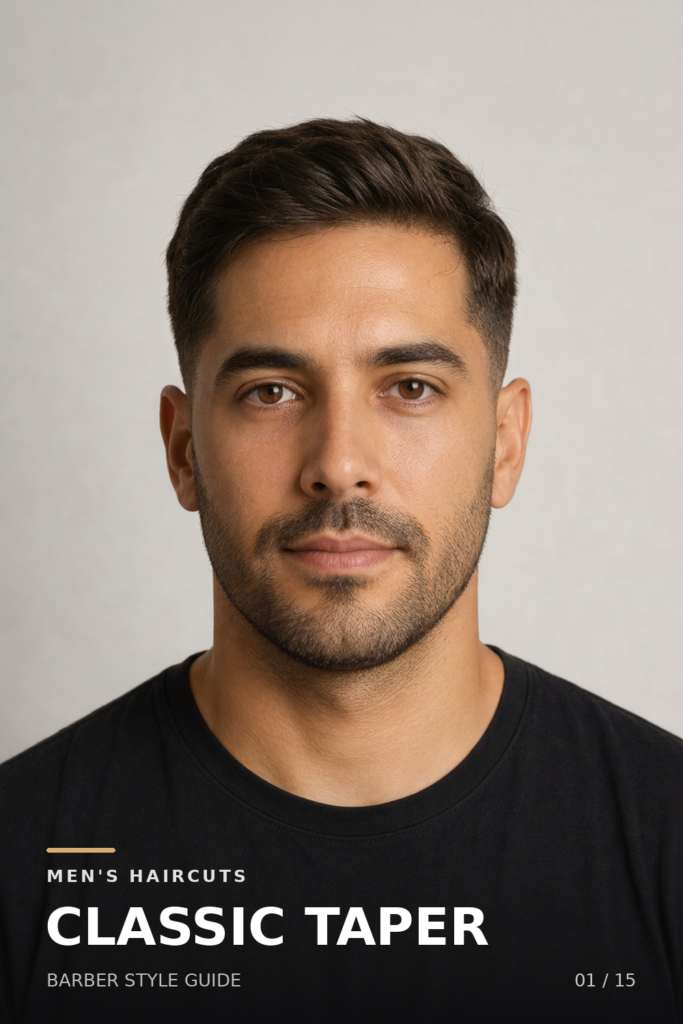
The sides and back get gradually shorter toward the neckline. The top stays longer and easy to comb. This cut works at the office and at a wedding. It suits straight, wavy, and lightly curly hair. Expect a trim every 3 to 5 weeks to keep the neckline clean.
2. Low Fade
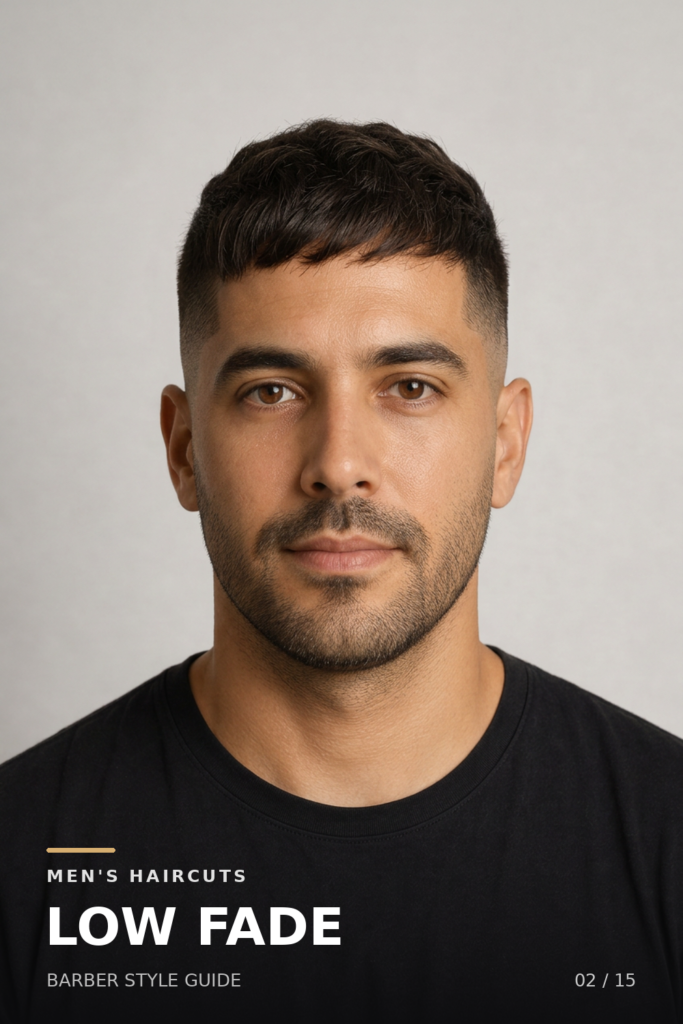
A low fade starts the blend just above the ears and curves down around the nape. It reads subtle rather than dramatic. Pair it with a textured top for a modern look. Most hair types work well here.
3. Mid Fade
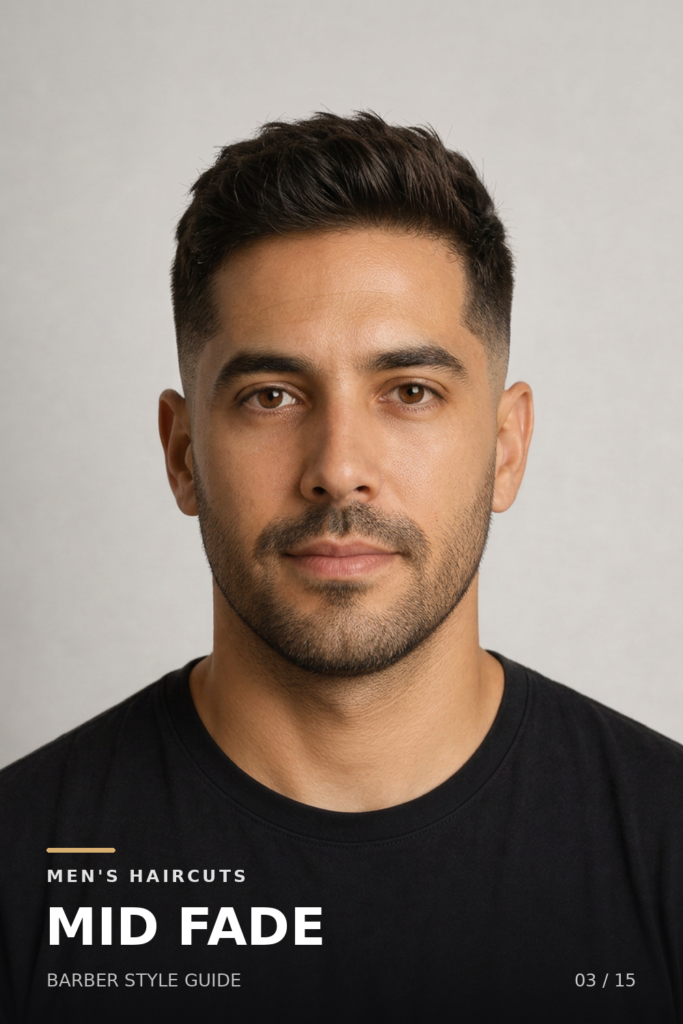
The blend begins around the temple area. Contrast between sides and top becomes more noticeable. This is a solid pick for medium-thick hair that needs some weight removed from the sides. Plan on frequent touch-ups because the sharp transition grows out quickly.
4. High Fade
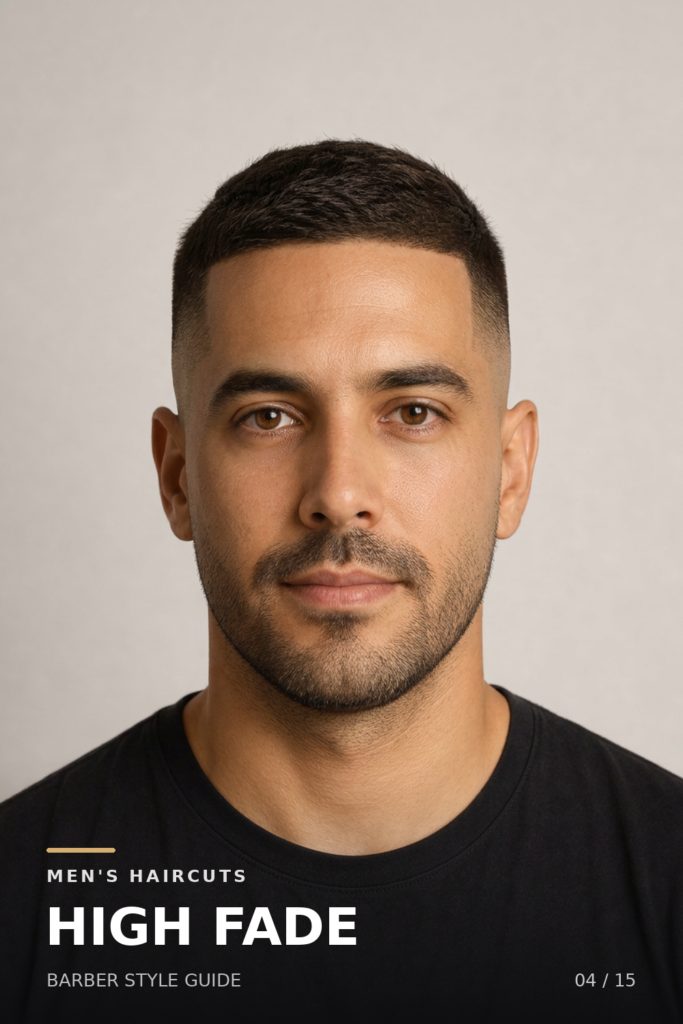
The fade starts high on the head, close to the crown. The result is bold and clean. Thick and coily textures hold the contrast beautifully. Skip it if you prefer a softer, lived-in shape.
5. Textured Crop
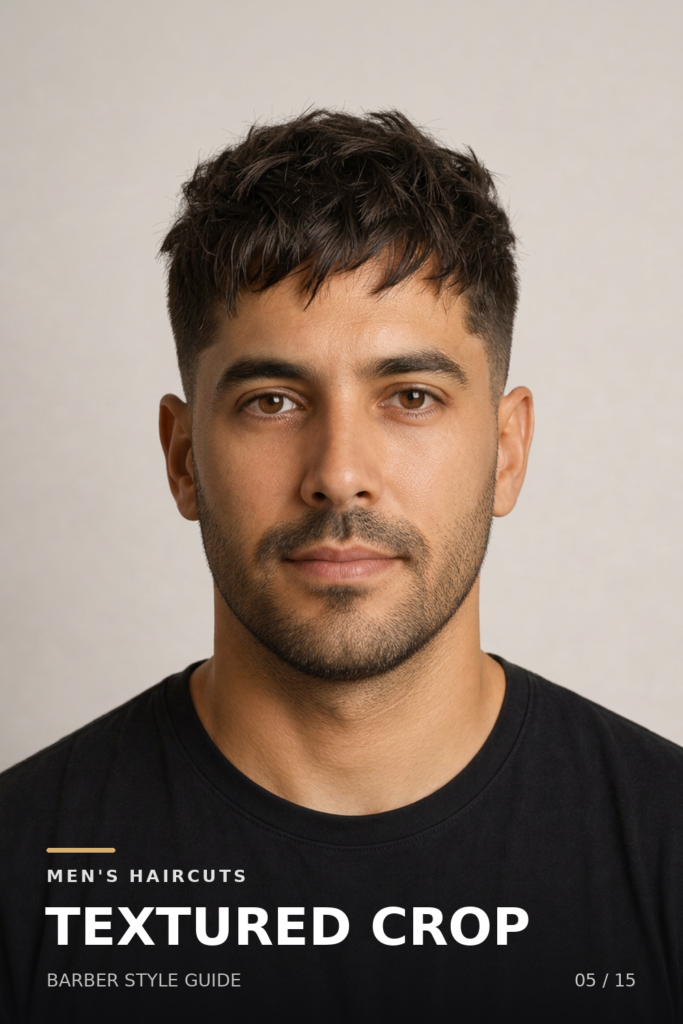
A short, choppy top sits above faded or tapered sides. A matte clay or paste adds separation. Wavy and thick hair gives the best movement. Fine hair can work too with a light sea salt spray for grip.
6. French Crop
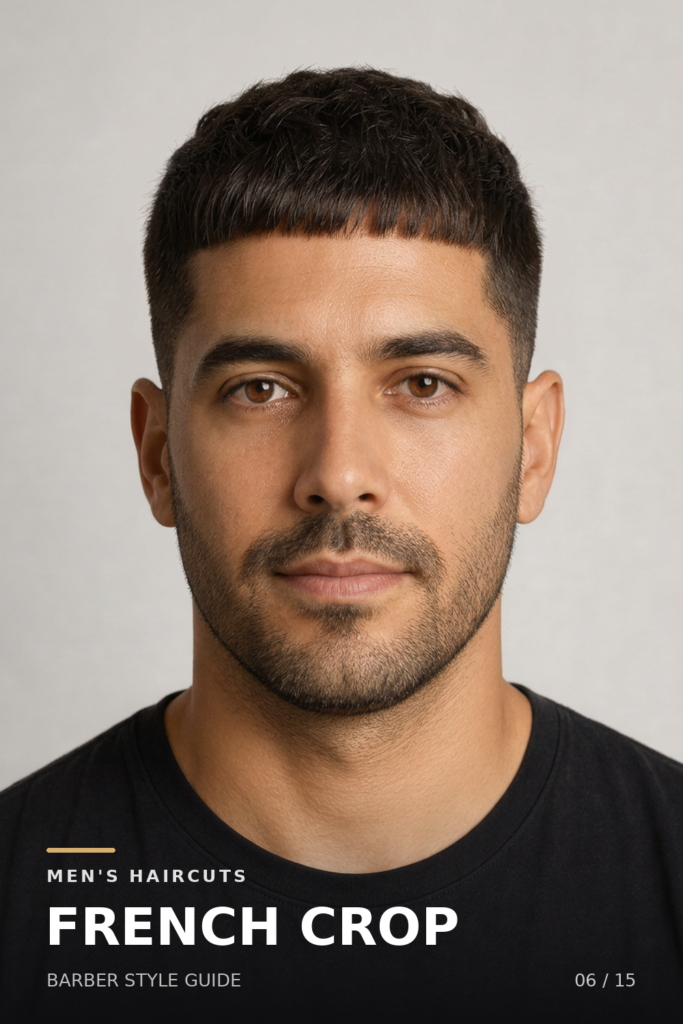
Short and blunt, the French crop pairs a cropped fringe with tight sides. It hides a receding hairline well. It also demands almost no styling. A dab of paste is plenty.
7. Crew Cut
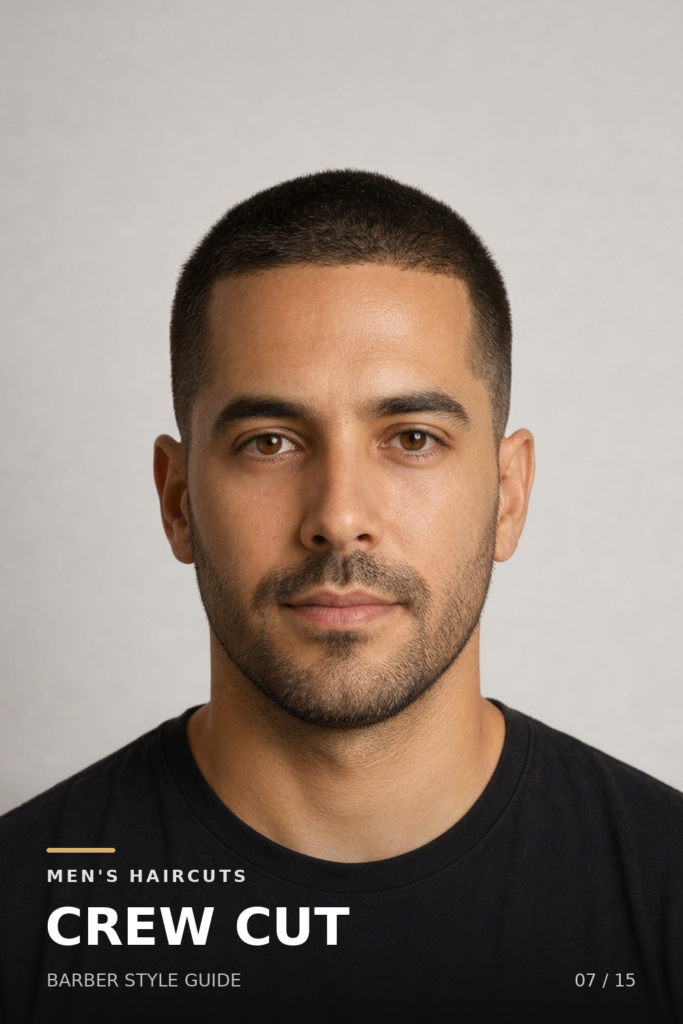
Short on the sides with a slightly longer top that’s brushed forward or upward. Few cuts are easier to live with. Wash, towel dry, and go. Straight and wavy hair works best.
8. Ivy League Cut

Think of a longer crew cut with enough length on top to part or sweep. It looks polished without trying hard. Use a light pomade for a neat finish. Visit your barber every 4 to 6 weeks.
9. Side Part

A defined part, tidy sides, and a combed top give this timeless look its authority. It flatters oval and square faces especially well. Medium-density straight hair behaves the most obediently. Add a bit of shine pomade for formal settings.
10. Pompadour

Volume sweeps up and back from the forehead. The sides stay short. This style takes a blow dryer, a round brush, and a firm-hold product. It rewards the effort with real presence. Thick hair gives the most lift.
11. Quiff
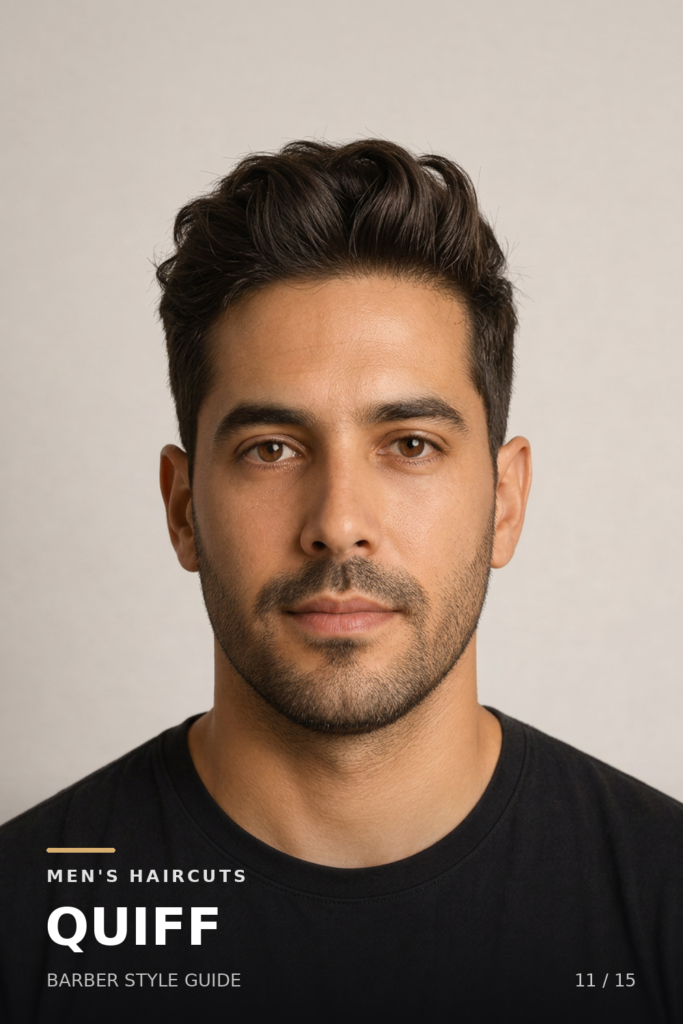
Similar to the pompadour but looser and more relaxed. The front lifts and tilts back with a casual flick. Medium-length straight or wavy hair suits it. Style with a blow dryer and a flexible cream.
12. Slick Back

Hair is combed straight back for a sleek, confident finish. Longer lengths of about 3 to 4 inches work best. Fine hair may look flat. Thick or wavy hair holds the shape without trouble.
13. Buzz Cut
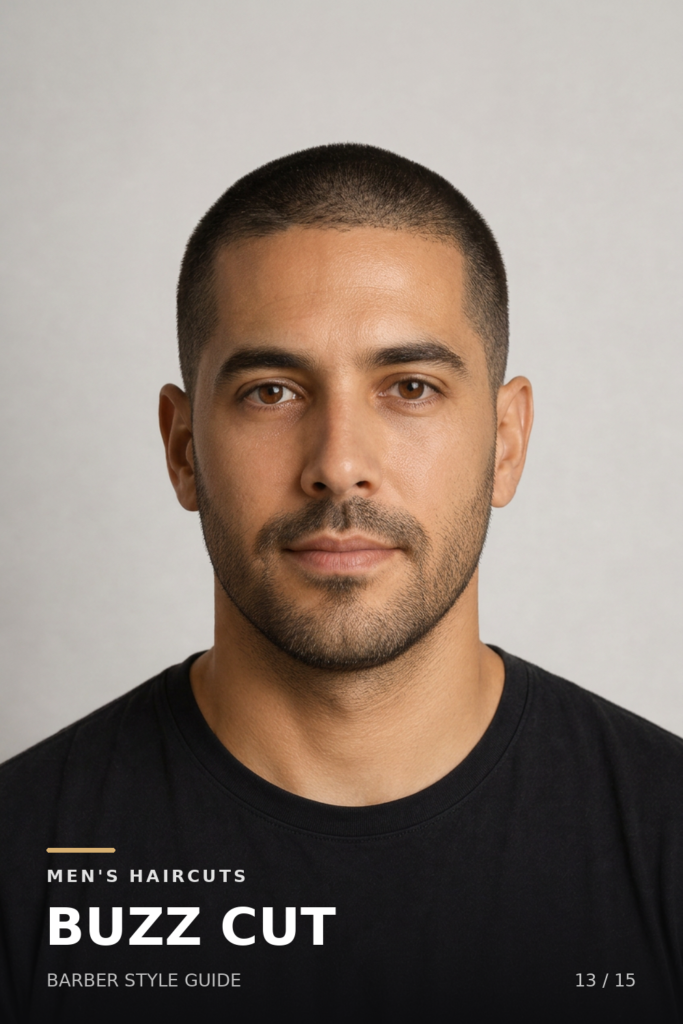
One guard length all over. Nothing is simpler. A buzz cut shows off head shape and bone structure. It also works across nearly every hair texture. Apply sunscreen if you spend time outdoors.
14. Medium Flow
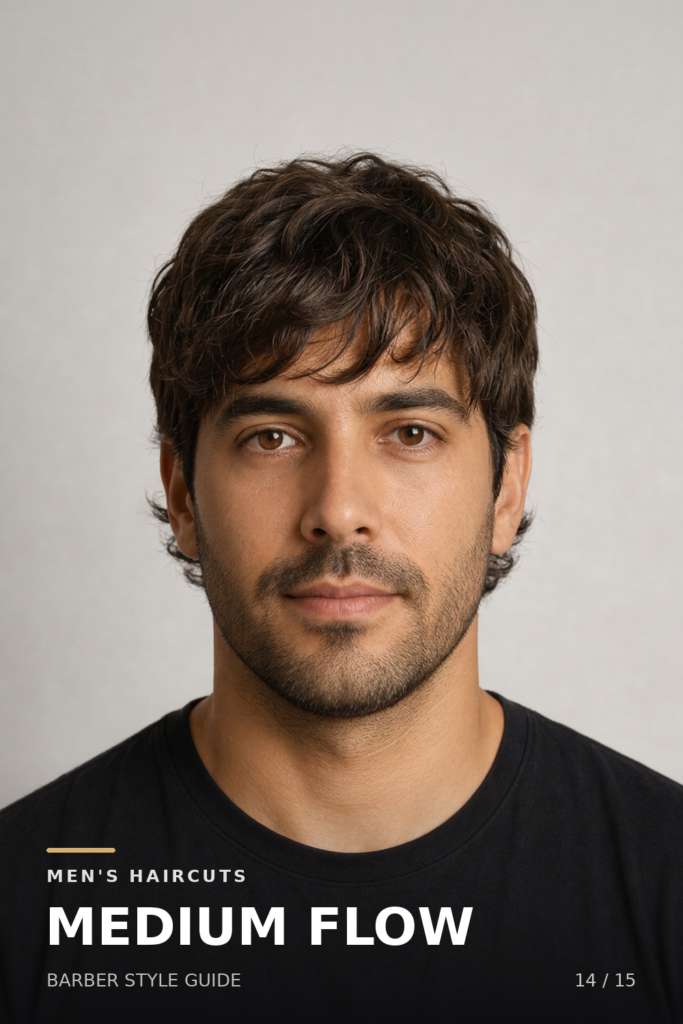
Hair reaches the ears or collar and falls in natural layers. Wavy hair looks especially good here. Tuck it behind your ears or push it back. Regular conditioning keeps the strands soft and smooth.
15. Curly Top with Taper
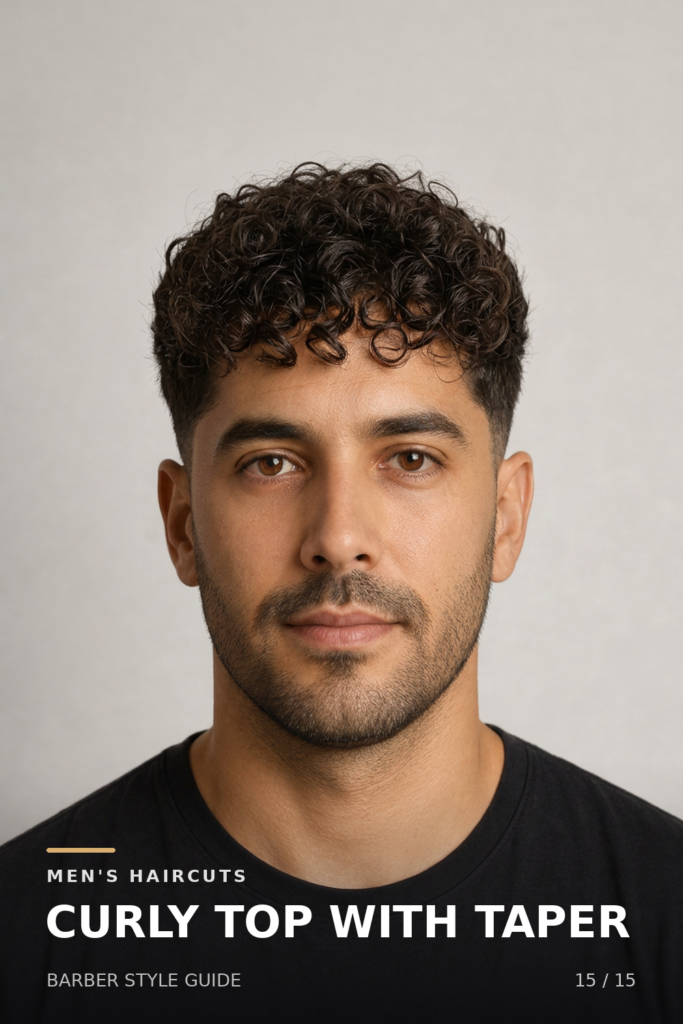
Defined curls on top meet a clean taper on the sides. This combination keeps curls tidy without sacrificing volume. Use a curl cream on damp hair and let it air dry. A diffuser speeds things up when you’re in a rush.
Best Mens Haircuts for Different Face Shapes
No rulebook applies to everyone. These pointers simply give you a starting place.
- Round faces: Height on top and tight sides create the illusion of length. Try a quiff, pompadour, or high fade.
- Oval faces: Nearly everything works. A side part, textured crop, or slick back all look balanced.
- Square faces: Soft, textured tops can mellow a strong jaw. A medium flow or ivy league cut is a good match.
- Heart-shaped faces: Keep volume near the forehead moderate. A side-swept fringe or medium flow balances a narrower chin.
- Long faces: Avoid excess height. A French crop or a classic taper with fuller sides adds width.
Best Mens Haircuts for Different Hair Types
Straight hair: It shows every line. Crew cuts, side parts, and ivy league styles look especially clean. Texturizing products prevent a flat finish.
Wavy hair: Natural movement gives you more room to play. Textured crops, quiffs, and medium flows all benefit from a little extra length.
Curly hair: Keep enough length for the curls to form. A curly top with a taper or fade gives structure. Avoid brushing dry curls because it causes frizz.
Coily hair: High and low fades, sharp lineups, and twist-friendly tops showcase tight textures. Moisture matters here. Leave-in conditioners and oils help.
Fine or thin hair: Shorter cuts create the illusion of fullness. A French crop or buzz cut often looks denser than a long, flat style. Lightweight volumizing powder adds grip.
Thick hair: Thick hair can handle weight and structure. Pompadours, slick backs, and high fades all show it off. Ask your barber to thin it out if it feels bulky.
How to Style Your Haircut: Step by Step
- Start with clean hair. Shampoo, rinse well, and towel dry until damp.
- Prep the hair. Apply sea salt spray for texture or a heat protectant if you’re using a dryer.
- Dry with direction. Point the airflow where you want the hair to lie. Use a brush for volume.
- Pick the right product. Matte clay suits textured looks. Pomade delivers shine and hold. Cream keeps curls soft.
- Work it in. Warm a pea-sized amount between your palms. Run it from the roots outward.
- Shape and finish. Use your fingers or a comb. Check the sides and back in a mirror.
Start with less product than you think you need. You can always add more.
How to Maintain Your Haircut
Trim schedule: Skin fades often need attention every 2 to 3 weeks. Tapers and scissor cuts usually hold for 4 to 6 weeks. Longer styles can stretch further.
Daily routine: Brush or comb gently. Avoid rough towel rubbing because it roughens the hair cuticle.
Washing: Shampoo two or three times a week for most hair types. Oily scalps may need more. Dry or curly hair often does better with less.
Conditioning: Use conditioner after shampooing. Add a weekly deep conditioner for dry or coily strands.
Staying fresh: Book your next appointment before leaving the shop. A quick neckline cleanup between full cuts keeps the shape crisp.
What to Ask Your Barber
Walking in with a photo is the smartest move you can make. Words alone get misread. These questions and phrases help close any gap:
- “I’d like a low fade with a textured top. Can you leave about two inches up top?”
- “What guard number do you recommend for the sides?”
- “Can you taper the neckline instead of squaring it off?”
- “How should I style this at home with my hair type?”
- “Which products do you suggest for my hair texture?”
- “How often should I come back to keep this shape?”
Be honest about your daily routine. A five-minute morning person needs a different cut than someone who loves a blow dryer.
Pros and Cons of Popular Mens Haircuts
Pros
- Sharp, defined cuts look polished with minimal effort.
- Short styles dry fast and need little product.
- Fades and tapers offer endless customization.
- Longer cuts allow more styling variety.
Cons
- Fades need frequent upkeep.
- Pompadours and quiffs demand time and tools.
- Buzz cuts expose the scalp to sun.
- Long hair requires regular conditioning and trims.
Frequently Asked Questions
What is the most popular men’s haircut right now?
Fades and tapers paired with textured tops remain among the most requested styles. Their flexibility across hair types keeps them popular.
What haircut suits a round face?
Styles with height and short sides, such as a quiff, pompadour, or high fade, tend to lengthen the face visually.
How often should men get a haircut?
Most men visit every 3 to 6 weeks. Skin fades need the shortest interval. Longer styles can wait longer.
What’s the easiest men’s haircut to maintain?
Buzz cuts and crew cuts take the least effort. Wash and go works for both.
What haircut works best for thin hair?
Shorter, textured cuts like a French crop or a buzz cut usually make thin hair look fuller.
What’s a good men’s haircut for curly hair?
A taper or fade on the sides with curls left longer on top keeps shape and definition.
What should I tell my barber if I’m unsure?
Bring photos and describe your routine. A good barber can adapt the style to your hair growth and face shape.
Final Thoughts
The right cut balances your face shape, hair texture, and daily routine. Trends can inspire you. They shouldn’t dictate every choice. Try a style that appeals to you, talk openly with your barber, and adjust over time. Confidence follows when the cut feels like yours.
