
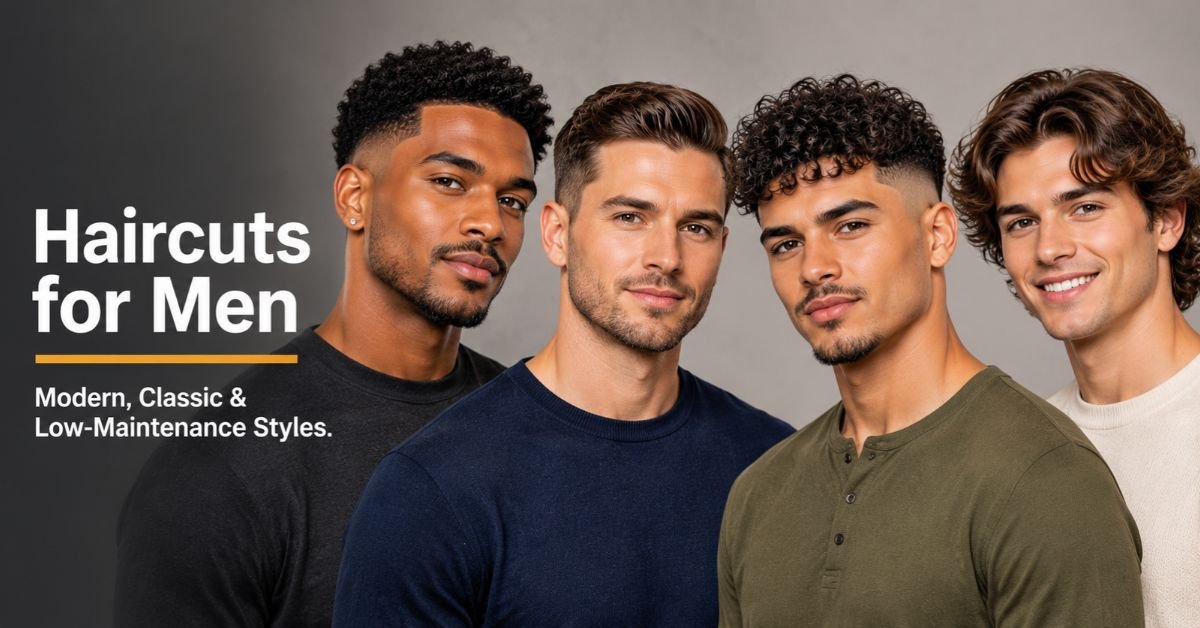
Choosing a new haircut can feel harder than it should. There are dozens of fades, crops, and cuts, and what looks great on a stranger online may not work for your hair type, face shape, or morning routine. The right style should look good and also fit the time you’re willing to spend on it.
This guide to haircuts for men covers classic cuts, modern fades, and easy styles that work with minimal effort. You’ll also find advice by face shape and hair type, step-by-step styling instructions, maintenance tips, and the exact words to use with your barber.
Quick Overview: Choosing a Men’s Haircut
| Factor | What to Know |
| Style range | Short, medium, and long cuts, from buzz cuts to layered flow |
| Ideal hair length | Anywhere from about ⅛ inch (buzz) to shoulder length, depending on the cut |
| Suitable hair types | Straight, wavy, curly, coily, fine, and thick (with adjustments for each) |
| Face shapes | Options exist for round, oval, square, heart-shaped, and long faces |
| Maintenance level | Ranges from very low (buzz cut, crew cut) to high (pompadour, undercut) |
| Styling difficulty | Ranges from wash-and-go to 10 minutes with a blow dryer and product |
Understanding Men’s Haircuts
A men’s haircut is usually built from three decisions: the sides and back (how short, and whether they’re tapered or faded), the top (length and texture), and the styling direction (swept, textured, or combed).
Most popular styles combine these elements in different ways. A taper gradually shortens the hair toward the neckline and ears. A fade blends the hair down to very short or skin-level. Longer tops add room for texture, volume, or a clean part.
People choose a haircut for different reasons: professionalism, easy upkeep, a fresh look, or a way to work with thinning hair or strong natural texture. A good cut starts with an honest look at your hair and your daily routine.
Best Haircut Ideas for Men
1. Classic Taper
The classic taper keeps the top slightly longer and gradually shortens the sides and back toward the neckline. It looks clean without being dramatic, which is why it suits offices, interviews, and everyday wear.
Best for: Straight, wavy, and lightly curly hair at most lengths.
Styling tip: A small amount of matte paste or cream keeps the top tidy.
Maintenance: A trim every 3 to 5 weeks keeps the neckline sharp.
2. Low Fade
A low fade begins just above the ears and around the neckline, leaving more hair on the sides than higher fades. It’s a subtle choice for anyone who wants a polished finish without a stark contrast.
Best for: Most hair textures, including curly and coily hair.
Styling tip: Pair it with a textured top or a side part.
Maintenance: Fades grow out visibly, so many people book a touch-up every 2 to 4 weeks.
3. Mid Fade
The mid fade starts around the temples. It’s more noticeable than a low fade and pairs well with both short and longer tops. If you like a defined, modern shape, this is a reliable pick.
Best for: Thick hair and curly textures, which fade cleanly.
Styling tip: Keep the top textured for contrast.
Maintenance: Moderate to high, because the shape is easiest to see when fresh.
4. Textured Crop
The textured crop is a short, choppy top with tapered or faded sides. It needs little styling and hides cowlicks and uneven growth well, which makes it one of the easiest low-maintenance styles to wear.
Best for: Straight, wavy, and thick hair.
Styling tip: Work a pea-sized amount of clay through damp or dry hair with your fingertips.
Maintenance: A trim every 4 to 6 weeks.
5. French Crop
The French crop pairs a short, forward-brushed top with a blunt fringe. It’s practical, tidy, and flattering for people who want a simple shape.
Best for: Straight or wavy hair, and it can help with a receding hairline by drawing attention to the fringe.
Styling tip: Use a light wax and brush the hair forward.
Maintenance: Low to moderate.
6. Crew Cut
The crew cut is a classic short style with slightly longer hair on top and short, tapered sides. It’s about as simple as men’s haircuts get.
Best for: Straight, wavy, and fine hair.
Styling tip: A light styling cream is usually enough. Many people just towel dry.
Maintenance: Low, with a trim every 4 to 6 weeks.
7. Buzz Cut
A buzz cut uses clippers at one length all over. It’s the lowest-effort option and works well for people who want to skip styling entirely.
Best for: Most hair types. Head shape matters more than hair texture here.
Styling tip: Moisturize your scalp, especially in dry or sunny weather.
Maintenance: Low styling, but regular clipper touch-ups keep it neat.
8. Ivy League Cut
An Ivy League cut is a slightly longer version of the crew cut. The top is long enough to part or comb, while the sides stay short and neat. It has a clean, collegiate look.
Best for: Straight and wavy hair.
Styling tip: Comb to the side with a light-hold product.
Maintenance: A trim every 4 to 5 weeks.
9. Side Part
The side part is a timeless cut with a defined part and a neat top. It works in professional settings and also looks sharp with casual clothes.
Best for: Straight, wavy, and fine hair, and some looser curls.
Styling tip: Comb the part into damp hair, then set it with a blow dryer.
Maintenance: A trim every 3 to 5 weeks keeps the line crisp.
10. Pompadour
The pompadour adds volume at the front, swept up and back. It makes a statement and takes the most styling of any cut here. The sides can be tapered or faded for contrast.
Best for: Thick or medium-density straight and wavy hair.
Styling tip: Blow dry upward with a round brush, then finish with a medium-hold pomade.
Maintenance: High, with regular trims to keep the shape clean.
11. Quiff
The quiff is a softer, more modern cousin of the pompadour. It has volume at the front but a more relaxed finish, so it’s easier to wear day to day.
Best for: Straight and wavy hair with some density.
Styling tip: Use a texturizing paste and a bit of blow drying for lift.
Maintenance: Moderate.
12. Undercut and Slicked-Back Styles
An undercut features very short sides and a much longer top. The top can be slicked back, swept to the side, or left textured. A clear contrast between top and sides is the point.
Best for: Medium to thick hair, straight or wavy.
Styling tip: A pomade or gel gives a polished slick-back, while clay gives a matte finish.
Maintenance: High, because the disconnect grows out noticeably.
13. Medium-Length Layered Cut
A medium-length cut keeps the hair around the ears or jaw, with layers that add movement and shape. It’s popular for wavy hair, and it works for people who want to grow their hair without a messy in-between stage.
Best for: Wavy, straight, and loosely curled hair.
Styling tip: Apply sea salt spray or a light cream to damp hair, then air dry or diffuse.
Maintenance: Low to moderate, with trims every 6 to 8 weeks.
14. Curly Top with a Fade
This cut keeps curls long on top and fades the sides. It shows off natural texture while keeping the overall shape neat.
Best for: Curly and coily hair.
Styling tip: Apply a leave-in conditioner or curl cream to damp hair, then let it dry naturally or diffuse.
Maintenance: Moderate, with fade touch-ups every few weeks.
Best Haircuts for Different Face Shapes
Face shape is a helpful guide, not a rule. Use these suggestions as starting points and adjust to your preferences.
- Round face: Styles with height on top and shorter sides, such as a quiff or textured crop, can add vertical definition.
- Oval face: This shape is considered versatile, so most cuts work. Experiment with your preferred style.
- Square face: Softer, textured styles like a crop or medium-length layers can balance a strong jawline. A buzz cut can also highlight it.
- Heart-shaped face: Medium-length cuts, side parts, and textured fringes can balance a wider forehead.
- Long face: Cuts with less height on top, such as a French crop or a fuller side-swept style, can keep the face from looking longer.
Best Haircut Options for Different Hair Types
- Straight hair: It holds clean lines well, so crops, side parts, and slick-backs work nicely. It can look flat, so a texturizing product helps.
- Wavy hair: Medium-length layers, quiffs, and textured crops make the most of natural movement.
- Curly hair: A curly top with a fade, or medium-length layers, keeps curls defined and controlled. Ask your barber to cut curls in a way that preserves their shape.
- Coily hair: Fades with a shaped top, twists, or a tapered natural cut work well. Moisture is key for definition and health.
- Fine or thin hair: Shorter, textured cuts like a crop or crew cut add the appearance of fullness. Heavy products can weigh fine hair down.
- Thick hair: Tapers and fades manage bulk, and thinning shears or layers can remove weight on top.
How to Style Your Haircut
Most styles follow the same basic process:
- Start with clean hair. Shampoo, condition as needed, and towel dry until damp.
- Apply a pre-styler if needed. Sea salt spray or a light mousse adds grip and body for fine or straight hair.
- Blow dry for shape. Point the dryer in the direction you want the hair to go. Use a brush or comb for volume or a defined part.
- Warm the product. Rub a pea-sized amount between your palms so it spreads evenly.
- Apply from back to front. Work through the hair with your fingers or a comb, then finish with the front.
- Set it. Use a light mist of hairspray if you want extra hold.
Product guide:
- Matte clay or paste: Texture with a natural, low-shine finish.
- Pomade: Shine and polish with a defined shape.
- Cream: Soft hold and moisture, good for curls and low-effort styles.
- Sea salt spray: Grip and tousled texture.
How to Maintain Your Haircut
- Trim schedule: Fades and short styles often look best with a trim every 2 to 4 weeks. Longer or layered cuts can go 6 to 8 weeks.
- Daily upkeep: Quick styling with the right product is usually enough. Skip heavy products if your hair is fine.
- Washing and conditioning: Shampoo as often as your hair and scalp need. Over-washing can dry out the scalp, so many people with curly or coily hair wash less often and condition more.
- Scalp care: A healthy scalp supports healthy hair. If you notice persistent flaking or irritation, a dermatologist can advise.
- Heat and tools: Use a heat protectant if you blow dry often.
What to Ask Your Barber or Hairstylist
A clear conversation makes the biggest difference. Bring a photo or two from different angles, and describe your routine honestly.
Useful questions and phrases:
- “What length would you recommend for the sides and top given my hair type?”
- “Can you do a low taper instead of a high fade?”
- “I want something low-maintenance. What do you suggest?”
- “How often should I come back to keep this looking sharp?”
- “What products would you use to style this at home?”
- “Can you show me how you’d style it so I can repeat it?”
Be specific about guard numbers or lengths when you can, and say whether you want the neckline rounded, squared, or tapered.
Pros and Cons of Popular Men’s Haircuts
Pros
- Short cuts save time and are easy to style.
- Fades and tapers give a clean, polished appearance.
- Longer styles allow versatility and personal expression.
- Many styles can be adjusted for hair thinning or texture.
Cons
- Fades and undercuts need frequent trims to look fresh.
- Longer or voluminous cuts take more time to style.
- Some styles require specific hair density or texture to work well.
- Results depend heavily on the barber’s skill and your daily routine.
Frequently Asked Questions
What is the best haircut for men?
There isn’t one best haircut. The right choice depends on your hair type, face shape, lifestyle, and how much time you want to spend styling. Classic tapers, textured crops, and side parts are popular because they work for many people.
What is the easiest men’s haircut to maintain?
Buzz cuts, crew cuts, and textured crops are among the easiest. They need little styling, and many look good with just towel drying and a bit of product.
How often should men get a haircut?
Short, faded styles usually look best with a trim every 2 to 4 weeks. Longer or layered styles can often go 6 to 8 weeks. Your preferences for neatness matter, too.
What haircut is best for thinning hair?
Shorter, textured cuts like a crew cut, buzz cut, or textured crop can make thinning less noticeable. A barber can recommend a shape that suits your hairline and density.
What haircut suits a round face?
Styles with height on top and shorter sides, such as a quiff or textured crop, can add vertical definition. Individual features matter, so treat this as a guideline rather than a rule.
What are good haircuts for curly hair?
A curly top with a fade, medium-length layers, and tapered natural styles all work well. Ask a barber who is comfortable cutting curls so the shape is preserved.
What should I tell my barber to get the haircut I want?
Bring photos, say how short you want the sides and top, and mention how much time you spend styling. Specific terms like “low taper” or “short on the sides, longer on top” help.
Final Thoughts
The best haircut is one that fits your hair, your face, and your daily routine. Classic cuts offer reliability, modern fades add definition, and low-maintenance styles keep mornings simple.
Take your time exploring ideas, bring clear references to your barber, and be open to small adjustments. A great haircut often comes from a good conversation as much as a good pair of clippers.
