
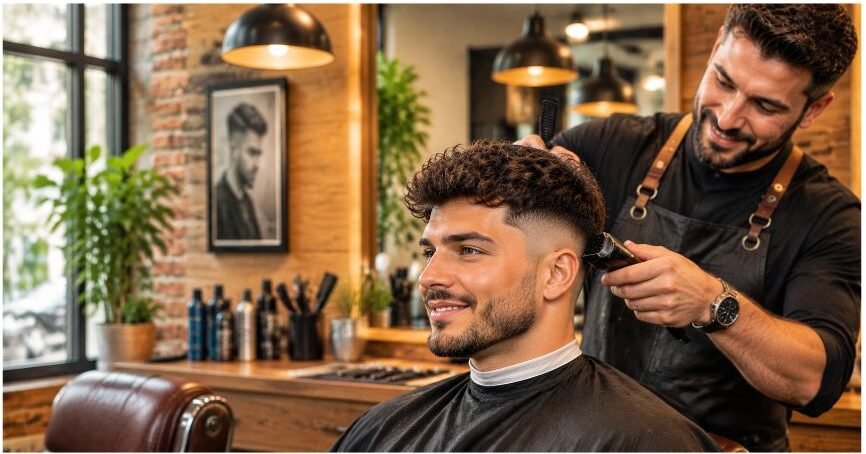
Typing “mens haircuts near me” into a search bar is usually the first step toward a fresh look, but it only answers half the question. You also need to know which cut suits your hair and face, and how to find a barber who can deliver it. This guide covers both.
Below, you’ll find a quick overview of popular men’s styles, 15 haircut ideas, advice by face shape and hair type, styling and maintenance tips, and exactly what to say in the barber’s chair. You’ll also learn how to choose a good barbershop nearby.
Quick Overview: Men’s Haircuts at a Glance
| Detail | What to Know |
| Style category | Men’s haircuts, from short fades to medium and longer cuts |
| Ideal hair length | Anywhere from a close buzz to shoulder length, depending on the cut |
| Suitable hair types | Straight, wavy, curly, coily, fine, and thick (the cut should be matched to the texture) |
| Face shapes | Most face shapes can be flattered with the right proportions |
| Maintenance level | Low (buzz cut) to high (sharp fade or pompadour) |
| Styling difficulty | Easy to moderate for most cuts |
Understanding Men’s Haircuts: What Are Your Options?
A men’s haircut is defined by three things: the length on top, the way the sides and back are blended, and the overall shape. Barbers use clippers, scissors, and razors to combine these elements into styles like fades, tapers, crops, and longer layered cuts.
People choose a haircut for different reasons. Some want a clean, low-effort look for work. Others want a statement style, or a cut that works with a receding hairline, thinning hair, or natural curls.
Two terms come up often:
- Fade: The hair gets gradually shorter toward the neck and temples, often blending down to the skin.
- Taper: A subtler version of a fade, where the hair is shortened gently around the ears and neckline.
How to Find the Best Barber Near You
A great cut starts with the right barber. When you search for a men’s barbershop nearby, look beyond the first result.
- Check recent reviews. Look for comments that mention consistency, listening skills, and cleanliness, not just star ratings.
- Look at their portfolio. Many barbers post photos of their work on social media or their shop’s website. Make sure they have experience with your hair texture and the style you want.
- Confirm the services. Some shops offer only cuts, while others also provide beard trims, hot towel shaves, and kids’ cuts.
- Compare walk-in and appointment options. Walk-ins are convenient, but booking ahead reduces waiting and often gives you more time in the chair.
- Note the price range. Prices vary by location, barber experience, and services, so check the shop’s listed rates before you go.
- Notice the shop itself. Clean tools, a tidy station, and a friendly consultation are good signs.
If you’re new to an area, ask coworkers or friends for recommendations. A short first visit, such as a basic trim, is a low-risk way to test a new barber.
Best Men’s Haircut Ideas
1. Classic Taper Cut
Short sides and back that gradually taper, with a bit more length on top. It’s clean, professional, and works for almost any setting. It suits most hair textures and needs a trim about every three to four weeks to stay neat. Style it with a light matte paste or cream.
2. Low Fade
The fade begins low, just above the ears and along the neckline. It looks sharp without being dramatic, making it a good first fade. It works with straight, wavy, and curly hair.
3. Mid Fade
The fade starts around the temple area, creating a more defined contrast between the sides and the top. It suits men who like a modern, polished look. Expect to refresh it every two to four weeks to keep the blend crisp.
4. High Fade
The fade starts high on the sides, giving a bold, high-contrast appearance. It pairs well with textured tops, quiffs, and curls. Because the contrast is strong, regrowth shows quickly.
5. Skin (Bald) Fade
The sides blend all the way down to bare skin. It’s a striking look that highlights the shape of the head, so it’s worth discussing with your barber first. It works across hair textures, including coily hair.
6. Textured Crop
A short, choppy top with a forward-swept fringe, often paired with a fade. It adds volume to fine or thin hair and hides a high forehead. Use a texturizing clay or sea salt spray for a lived-in finish.
7. French Crop
A variation of the crop with a short, blunt fringe across the forehead. It’s low maintenance and works well for straight or wavy hair, and it can help camouflage a receding hairline.
8. Side Part
A timeless cut with a defined part and neatly combed top. It suits office settings and formal occasions. Straight and wavy hair respond best, and a light pomade gives hold without stiffness.
9. Pompadour
The top is swept up and back, with volume at the front. It takes more time to style and usually needs a blow dryer and a medium-to-strong hold product. It looks best on thicker hair or hair with some natural body.
10. Quiff
Similar to a pompadour but softer and more relaxed. The front is lifted and brushed back or slightly to the side. It’s more forgiving to style and suits a range of face shapes.
11. Buzz Cut
One length all over, trimmed with clippers. It’s the easiest cut to maintain and a practical option for busy schedules or thinning hair. Ask your barber which guard number suits you.
12. Crew Cut
Short on the sides with slightly longer hair on top that’s kept neat and off the forehead. It’s a dependable, low-fuss option for straight and wavy hair.
13. Ivy League Cut
A slightly longer version of the crew cut that can be parted or brushed to the side. It offers a neat, collegiate look that works well in professional settings.
14. Undercut
The sides and back are cut very short, and the top is left noticeably longer and disconnected. It can be styled slicked back, textured, or tied up. Regular upkeep keeps the contrast clean.
15. Medium-Length Flow
Layered hair that sits around the ears or longer. It’s a good option for wavy or straight hair and for people who prefer a relaxed, low-maintenance routine. Regular trims prevent split ends and keep the shape.
Best Haircuts for Different Face Shapes
Face shape is a helpful guide, not a strict rule. Use it to balance proportions, and let personal preference make the final call.
- Round face: Height on top and shorter sides, such as a quiff, pompadour, or high fade, can add length and definition.
- Oval face: This shape is generally versatile, so most styles work. Try a side part, a taper, or a textured crop.
- Square face: Softer cuts, such as a textured crop or medium-length layers, can balance a strong jawline. Crew cuts also emphasize it in a flattering way.
- Heart-shaped face: A side-swept fringe or medium-length cut can soften a wider forehead. Avoid very short tops that draw attention to the forehead.
- Long face: Styles with less height on top, such as a French crop or a side part with some side volume, can help balance length.
Best Haircuts for Different Hair Types
- Straight hair: Holds sharp lines well, so side parts, crew cuts, and crops work nicely. Add texture products if it looks flat.
- Wavy hair: Suits medium-length flows, quiffs, and textured crops. Avoid over-brushing, which can cause frizz.
- Curly hair: Looks great as a curly top with a taper or fade. Ask for scissor work on top to shape curls and keep them from puffing out.
- Coily hair: Fades, tapered cuts, twist-outs, and shaped natural tops work well. Moisture is key, so use leave-in conditioners and oils suited to coily textures.
- Fine or thin hair: Short cuts with texture, like a crop or a buzz cut, create the appearance of fullness. Light products work better than heavy pomades.
- Thick hair: Can handle pompadours, undercuts, and longer cuts. A barber can thin or layer the hair to reduce bulk.
How to Style Your Haircut at Home
Exact steps depend on the cut, but this simple routine works for most medium-to-short styles.
- Start with clean hair. Shampoo and condition as needed, then towel-dry until damp.
- Apply a prep product if needed. Sea salt spray adds texture. A heat protectant helps if you plan to use a blow dryer.
- Blow-dry for shape. Use medium heat and direct hair the way you want it to sit, brushing upward for volume or sideways for a part.
- Choose the right styling product.
- Matte clay or paste: texture and natural hold
- Pomade: shine and structure for classic styles
- Cream or lotion: light control for wavy or curly hair
- Work the product through. Warm a small amount between your palms, then apply from the back to the front.
- Finish the look. Use your fingers or a comb to shape it, and add a light-hold spray if you need extra staying power.
Tools worth having: a quality comb, a soft brush, and a blow dryer with adjustable heat.
How to Maintain Your Haircut
- Trimming frequency: Fades and tapers generally look best when refreshed every two to four weeks. Longer cuts may only need a trim every six to eight weeks.
- Daily care: Brush or comb gently, and avoid applying too much product.
- Washing and conditioning: Wash a few times a week, or as your hair and scalp require. Dry or coily hair often does better with less frequent washing and more conditioning.
- Scalp health: A gentle shampoo and regular rinsing help keep the scalp comfortable. If you notice persistent irritation or flaking, a dermatologist can advise.
- Keep it fresh: Book your next appointment before leaving the shop, and tidy neck and ear lines between visits only if you’re comfortable doing so.
What to Ask Your Barber
Clear communication prevents most haircut disappointments. Bring reference photos and be specific.
- “Can you show me what a low taper would look like on me?”
- “What guard number do you recommend for the sides?”
- “How much should I leave on top for my hair texture?”
- “How often should I come back to keep this looking sharp?”
- “Which products would you recommend for styling this at home?”
- “Can you leave it a bit longer? I’d rather go shorter next time.”
It also helps to mention your daily routine, how much time you spend styling, and any concerns such as cowlicks, a receding hairline, or thinning areas.
Pros and Cons of Regular Barbershop Haircuts
Pros
- Professional shaping and blending that’s hard to achieve at home
- Personalized advice based on your hair and face shape
- Extra services such as beard trims and hot towel finishes
- A consistent look when you find a barber you trust
Cons
- Ongoing cost, especially for styles that need frequent upkeep
- Waiting times at busy walk-in shops
- Results can vary between barbers
Frequently Asked Questions
How do I find a good men’s haircut near me?
Search for barbershops in your area, read recent reviews, and check photos of their work. Choose a barber experienced with your hair type and the style you want.
What is the most popular men’s haircut?
Fades, tapers, and textured crops are widely requested, but popularity changes over time and varies by region. Choose the style that suits your hair, face shape, and routine.
How often should men get a haircut?
Short fades and tapers usually look best with a refresh every two to four weeks. Longer styles can often go six to eight weeks between trims.
What should I tell my barber?
Share the style you want, show reference photos, and describe the length on top and the sides. Mention how much time you’re willing to spend styling.
Do I need an appointment for a men’s haircut?
Not always. Many barbershops accept walk-ins, but booking ahead helps you avoid waiting and secure the barber you prefer.
What is the difference between a fade and a taper?
A fade blends hair down to very short or bare skin, creating a dramatic gradient. A taper shortens hair more gradually and usually keeps more length at the neckline.
What is the lowest-maintenance men’s haircut?
A buzz cut or a short crew cut generally requires the least styling and upkeep.
Can I get a good haircut if I have thin or receding hair?
Yes. Short textured cuts, crops, and buzz cuts can make thinning areas less noticeable. A barber can recommend what works best for your pattern.
Final Thoughts
The best result from a “mens haircuts near me” search comes from pairing the right barber with the right cut. Consider your face shape, hair texture, and daily routine, then choose a style that feels like you.
Bring photos, ask questions, and don’t be afraid to try something new. The right haircut should look good and be easy to live with.
